
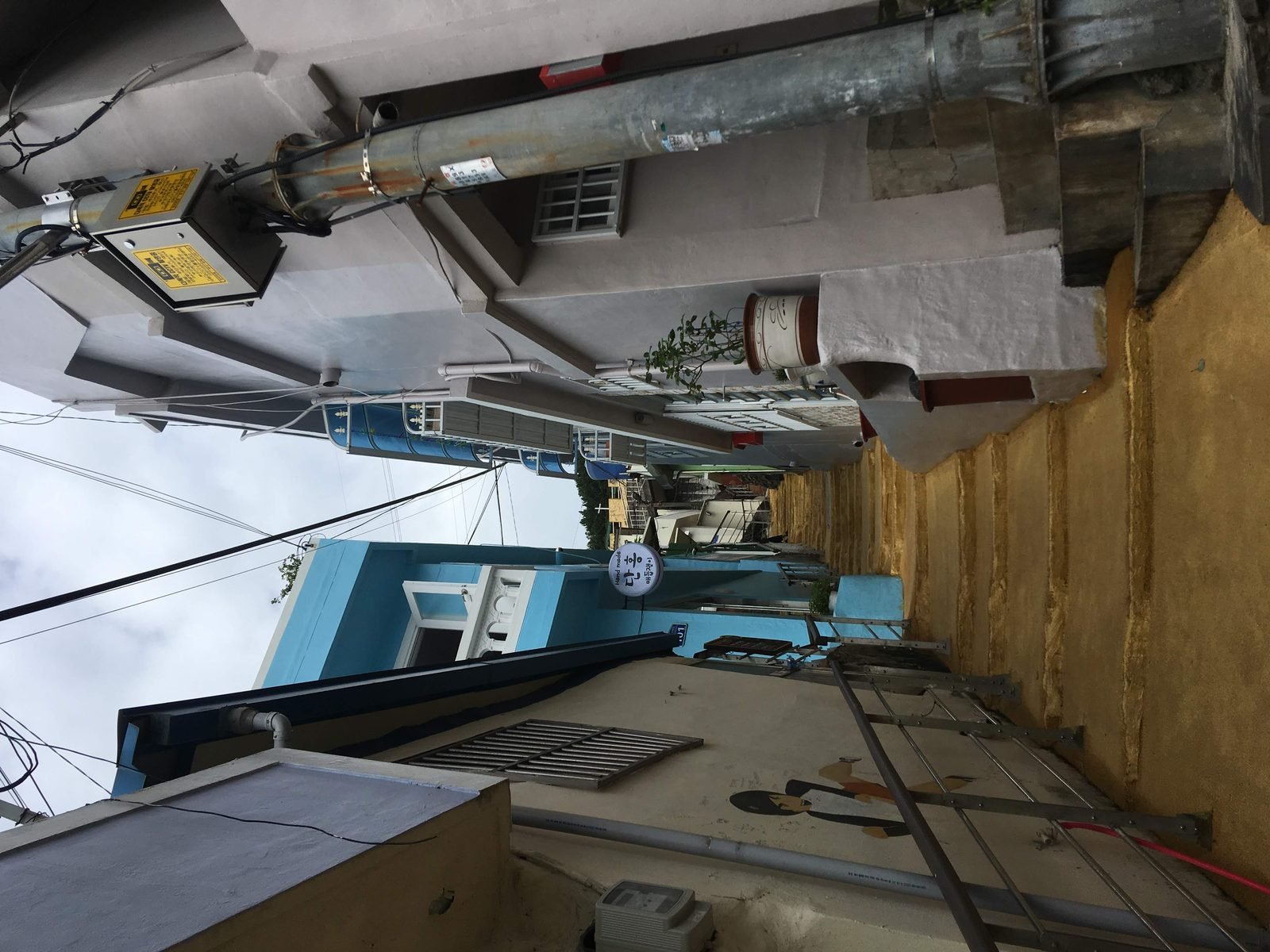
The nickname “Machu Picchu of Korea” suggests an attraction built for visitors. Gamcheon Culture Village is not one. Visit Busan records the comparison, which the village earned from colorful roofs that seem to touch the sky, but it also tells the plainer story: Korean War refugees settled this mountainous ground and cultivated it to make a living. They built their houses in staircase fashion on the foothills of a coastal mountain, and people still live in them.
That is why Busan has designated the area a Special Management Zone, a step VisitKorea reported in August 2026 after residents kept experiencing inconvenience from rising visitor numbers. The rules of the zone say more about how to visit than the nickname does.

A Hillside Settled by Refugees
The village is a product of the Korean War, not of tourism. Refugees arrived in Busan during the war and settled the hillside, and the houses climb the slope in stairs because that was the land available. For decades that was the whole story of the place.
The change came in 2009, when students, artists and residents decorated the village as part of a Village Art Project. Murals and sculptures made by the community now fill the alleys, and the village has grown into one of Busan’s leading attractions. VisitKorea describes the alleys as decorated by the residents themselves, which explains the unpolished feel: the art sits on working homes, not on a stage set.
Read this way, the nickname is about the view, not the history. Visit Busan says the landscape gave the village its comparison with Machu Picchu, while the town itself was part of a painful chapter in Busan’s past. Visit Busan calls the village a landmark of west Busan today, favored by tourists as an experience-based destination.
The Rules of a Special Management Zone
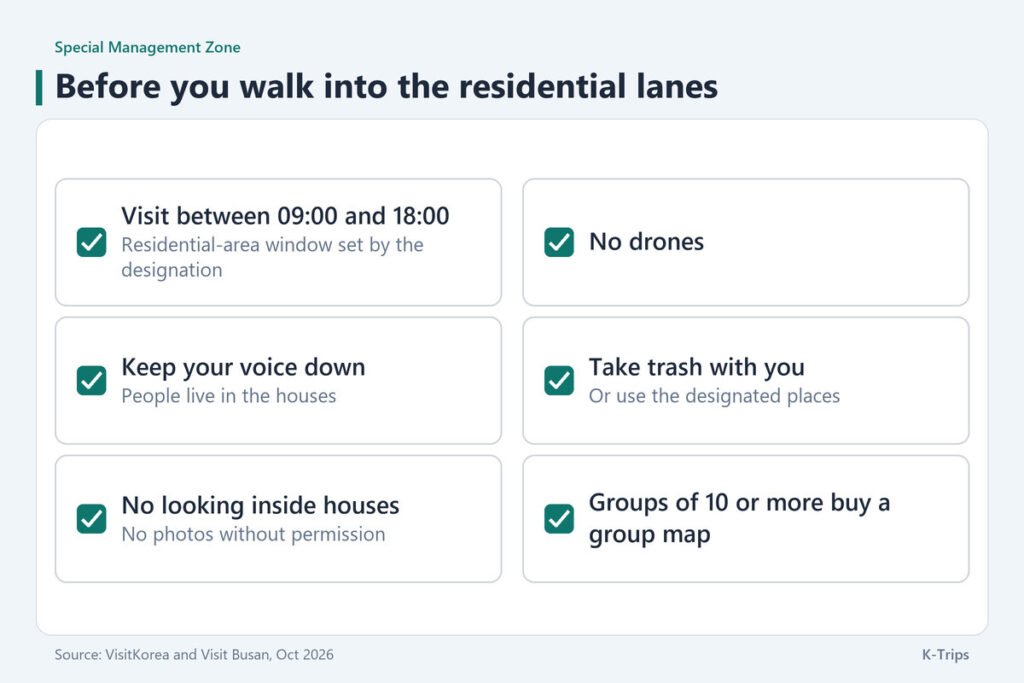
VisitKorea lists the guidelines that came with the designation. Tourists may visit the residential areas only from 09:00 to 18:00, to give residents a quiet evening. Visitors should keep their voices down, avoid looking inside houses and avoid taking photos without permission. Groups of 10 or more must buy a group map at the village information center or on its website.
The reasons are stated in the same notice. Visitor numbers, domestic and international, have risen recently and residents have kept experiencing inconvenience, and the vehicle limit is there to ensure pedestrian safety and ease traffic congestion on lanes that were never meant for cars. A rule like the evening cutoff is therefore not a courtesy suggestion. It is a response to a specific pattern of use, and the designation gives it an official footing.
Two more rules shape the day. Tourist vehicles, meaning passenger cars and taxis, are restricted inside the village, and large buses may enter only through a prior reservation. Rubbish goes in designated places or comes home with the visitor. Visit Busan adds a short instruction of its own: observe silence and cleanliness, because this is a residential area, and do not use drones.
Gamcheon is not the only place under this kind of regime. VisitKorea names Seoul’s Bukchon Hanok Village and Yeoncheon’s Hantangang tourist area as similar special management areas. In all of them the visitor is a guest in a neighborhood, and the rules exist because the neighborhood was not designed to absorb a crowd.
Stamp Map, Museum and Photo Zones
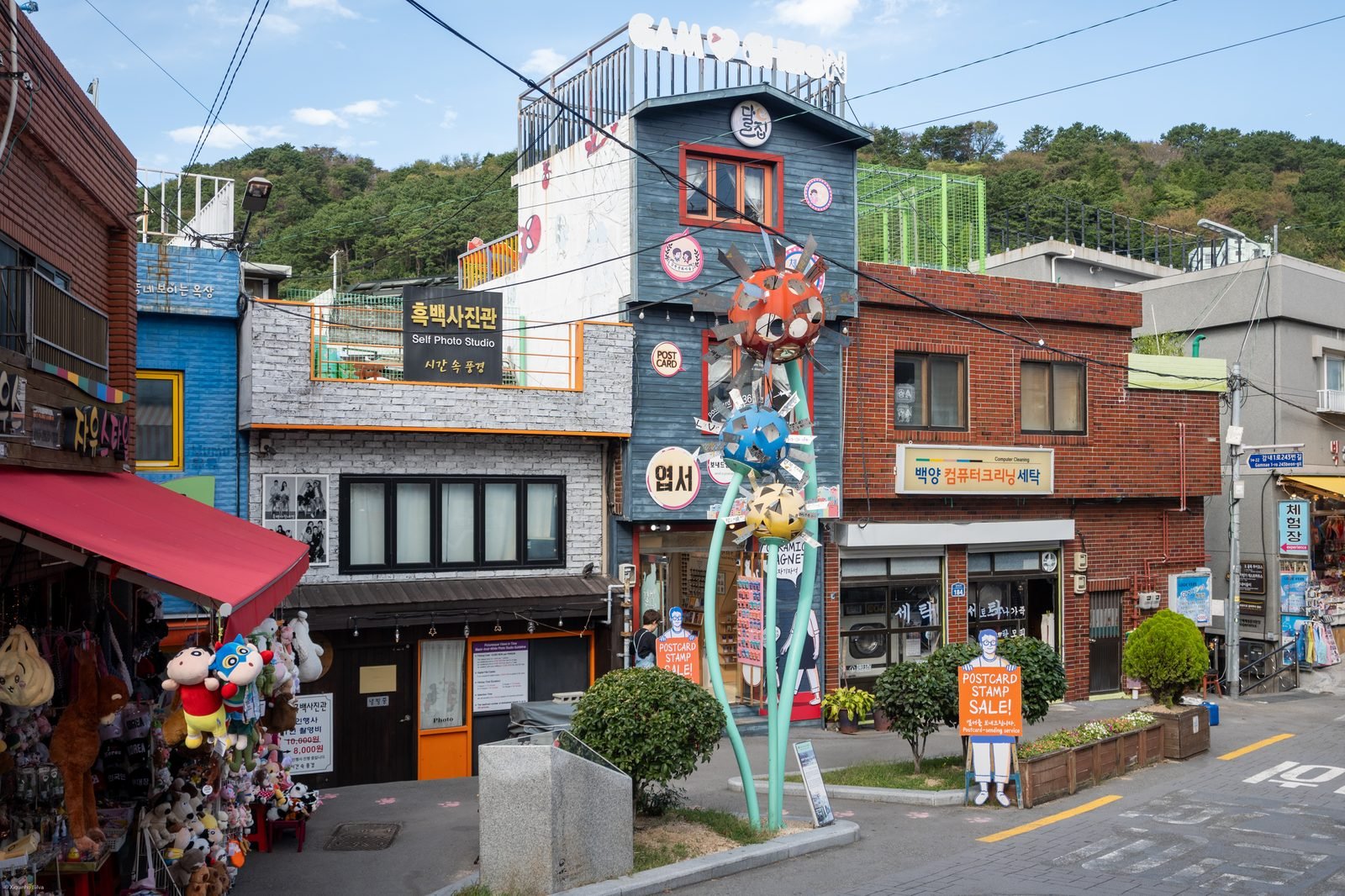
Visit Busan suggests buying a stamp map at the village information center and following it to complete the alley tour, and says the small museum at the entrance is the place to start, since it tells the village’s story. The map turns a maze of lanes into a route past murals, sculptures and viewpoints, and the stamps give a reason to take the lanes the map points to instead of any lane that looks photogenic.
Along the way the alleys carry souvenir shops and workshops where visitors can join programs and make their own keepsake. Most visitors, according to Visit Busan, also try the hanbok program, which rents outfits from traditional hanbok to clothes of the enlightenment era at a low price.
The Little Prince and the Lighthouse Zone
The best-known photo zone is the one where the Little Prince and the desert fox look out over the village, which Visit Busan calls the highlight of the alley trip. It also warns that the queue is long and judges the picture worth the wait. A second option is the photo zone by the lighthouse, which suits anyone who wants the village behind them rather than below.
After the lanes, the practical next stop is food, and the harbor market at Jagalchi is on the same metro line as the village’s bus connection.

Reaching the Village by Metro and Village Bus
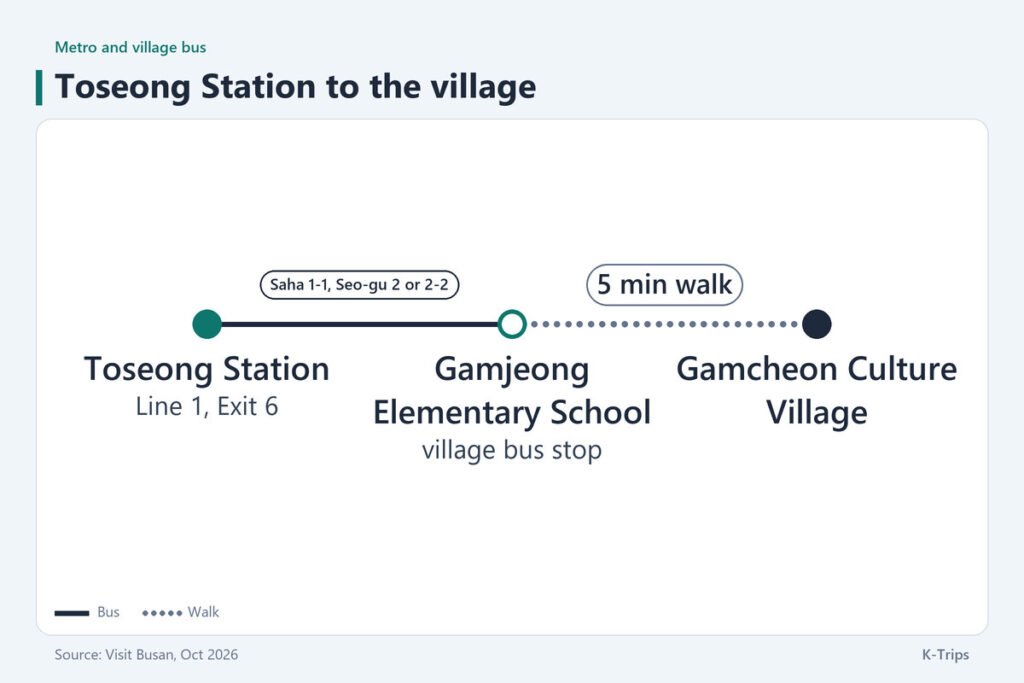
Visit Busan gives two metro routes. From Exit 6 of Toseong Station on Line 1, change to a village bus, Saha 1-1, Seo-gu 2 or Seo-gu 2-2, and get off at Gamjeong Elementary School. From Exit 6 of Goejeong Station on Line 1, take Saha 1 or Saha 1-1 to the same stop. Either way, the walk from the stop to the village is 5 minutes.
For a map app, the address is 203 Gamnae 2-ro, Saha-gu, Busan, and the information center can be reached on +82-51-204-1444, the number both Korean tourism sites list. The two sites agree that the village is open all year, which is why the practical limits are the visiting hours and not a closing day.
This is the route that fits the restrictions, and it fits a longer day too: a two-day Busan plan puts Gamcheon on the Line 1 morning for that reason.
Parking and Accessible Facilities
Drivers are pointed to Gamcheon Public Parking Lot 2, and Visit Busan also notes an accessible parking lot and an accessible bathroom. On the fee, the two official sources differ: Visit Busan calls entry free except for parking, while VisitKorea marks parking as free, so the charge is worth confirming at the lot.
Hours That Change by Month
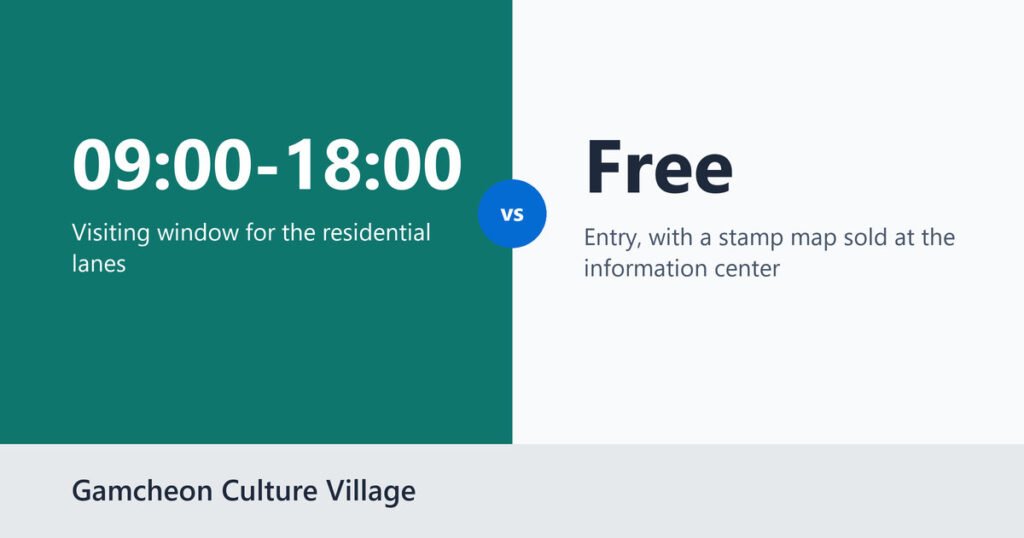
Visit Busan lists the village as open every day, from 09:00 to 18:00 between March and October and from 09:00 to 17:00 between November and February. Entry is free apart from parking. VisitKorea’s guideline for the residential areas sets the visiting window at 09:00 to 18:00 without a winter exception, and its destination listing shows the grounds open around the clock all year.
The three do not agree: only Visit Busan separates the seasons, VisitKorea’s etiquette notice gives 18:00 all year, and its destination listing says open 24 hours. Visit Busan’s schedule is the most specific of them, so for planning, take 09:00 as the start and, in winter, 17:00 as the finish.
A workable shape for the day follows from these limits. Reach the village near 09:00, collect the stamp map first, and do the lanes before the early afternoon, so that the lighthouse and Little Prince photo zones are reached while the visiting window is wide open.
Missteps Visitors Make in Gamcheon’s Lanes
The first slip is arriving as a group without the right map. VisitKorea says groups of 10 or more must buy a group map, at the village information center or on its website, so a party of ten should settle that before walking in.
The second is carrying summer hours into winter. From November to February the close is 17:00 on Visit Busan’s schedule, an hour before the 18:00 of the other months. The fix is to start in the morning and finish the lanes by early afternoon on short winter days.
The third is treating doorways and windows as part of the scenery. They belong to households, and looking inside or photographing without permission is exactly what the zone rules forbid. The fix is to keep to the stamp-map route, keep voices low, and leave the drone at home.