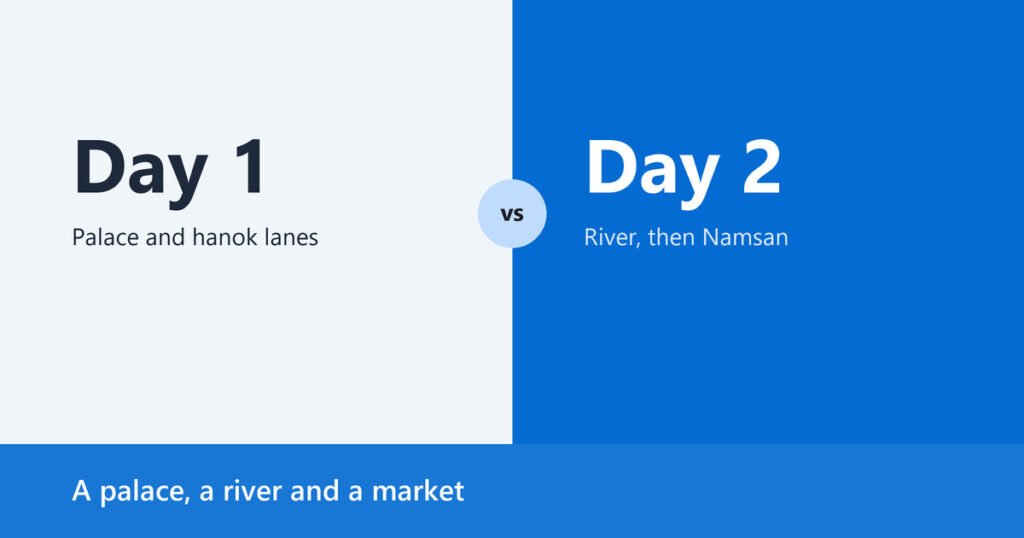
Three days in Seoul can be spent crossing the map or reading one area at a time. The first is counted in subway transfers, the second in opening hours, and the plan below follows the second: a palace district on Day 1, a river and mountain day on Day 2 and the east side on Day 3.
Two closing rules bind the order more than anything else. Gyeongbokgung Palace is closed on Tuesdays, and most of Gwangjang Market closes on Sundays.
_Geunjeongjeon(hall).jpg)
Three Districts, Three Clocks
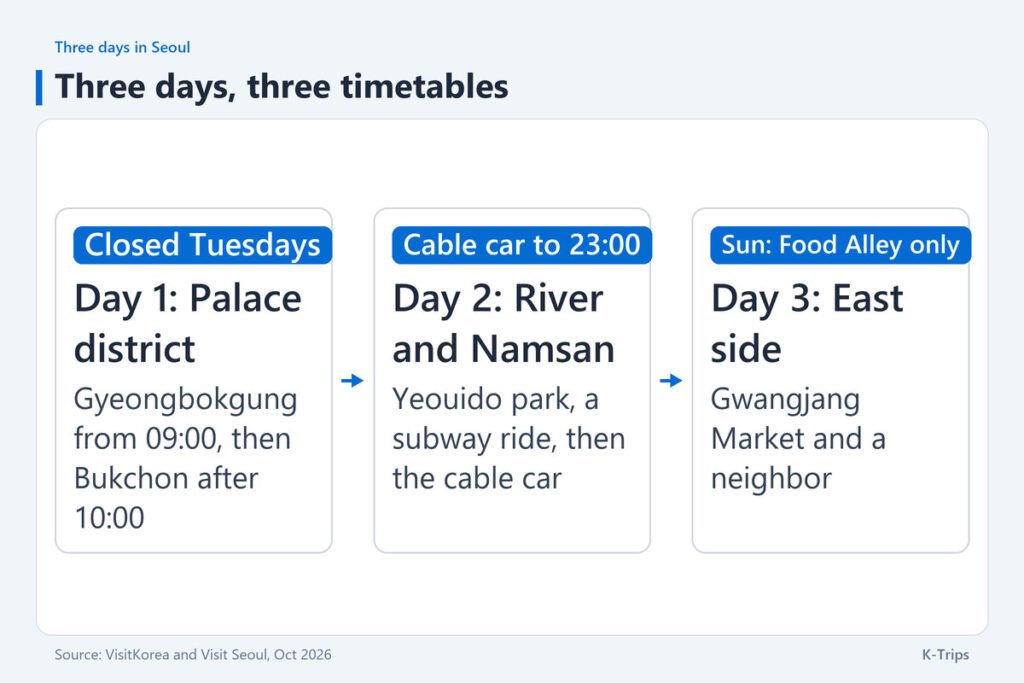
Each day in this plan is ruled by a different timetable. Day 1 runs on palace hours: Gyeongbokgung opens at 09:00 in every season and closes at 17:00, 18:00 or 18:30 depending on the month, according to VisitKorea. Day 2 has the loosest clock of the three, because Visit Seoul lists Yeouido Hangang Park as open 24 hours and the Namsan Cable Car runs from 10:00 to 23:00. Day 3 depends on the market: Gwangjang Market trades from 09:00 to 18:00 and shuts on Sundays, while its Food Alley stays open until 23:00 every day.
The three clocks overlap poorly in exactly the right way. The palace day wants the morning, the river day wants the late afternoon and night, and the market day works from the first hour to the last, so no two days compete for the same part of the clock. That is what lets the order change without damage, within the closing rules covered in the sixth section.
The Fare Behind Every Hop
Seoul Metro states the subway fare as a distance-proportional system. The basic fare for an adult with a transportation card is ₩1,550 for a journey within 10 kilometers, and a single-use ticket costs ₩100 more. Between 10 and 50 kilometers, ₩100 is added for every 5 kilometers, and beyond 50 kilometers ₩100 for every 8. Transfers between subway and bus fall under an integrated distance-proportional fare, so a bus leg after a subway ride is not charged as a second basic fare.
The same page lists lower fares for younger riders. A teenager pays a ₩900 basic fare and a child ₩550, and toddlers under six ride free with a guardian, up to three toddlers per adult. The free-ride categories on that page, including seniors, apply to separately designated cardholders, so a visitor should not count on a free ride. A family plan can therefore cost noticeably less than the adult figures in the cost table, which is why the table shows adult fares only.
The cost table in the last section assumes six rides a day at the base fare. That is a planning assumption, not a measurement, and a longer hop past the 10-kilometer line adds ₩100 for every further 5 kilometers.
Day One Stays Inside the Palace District
The palace and the hanok village sit side by side, and the day works because nothing on it needs a train after the first ride. The only fixed point is the palace gate, which opens early, so the order is set by the hours rather than by taste.
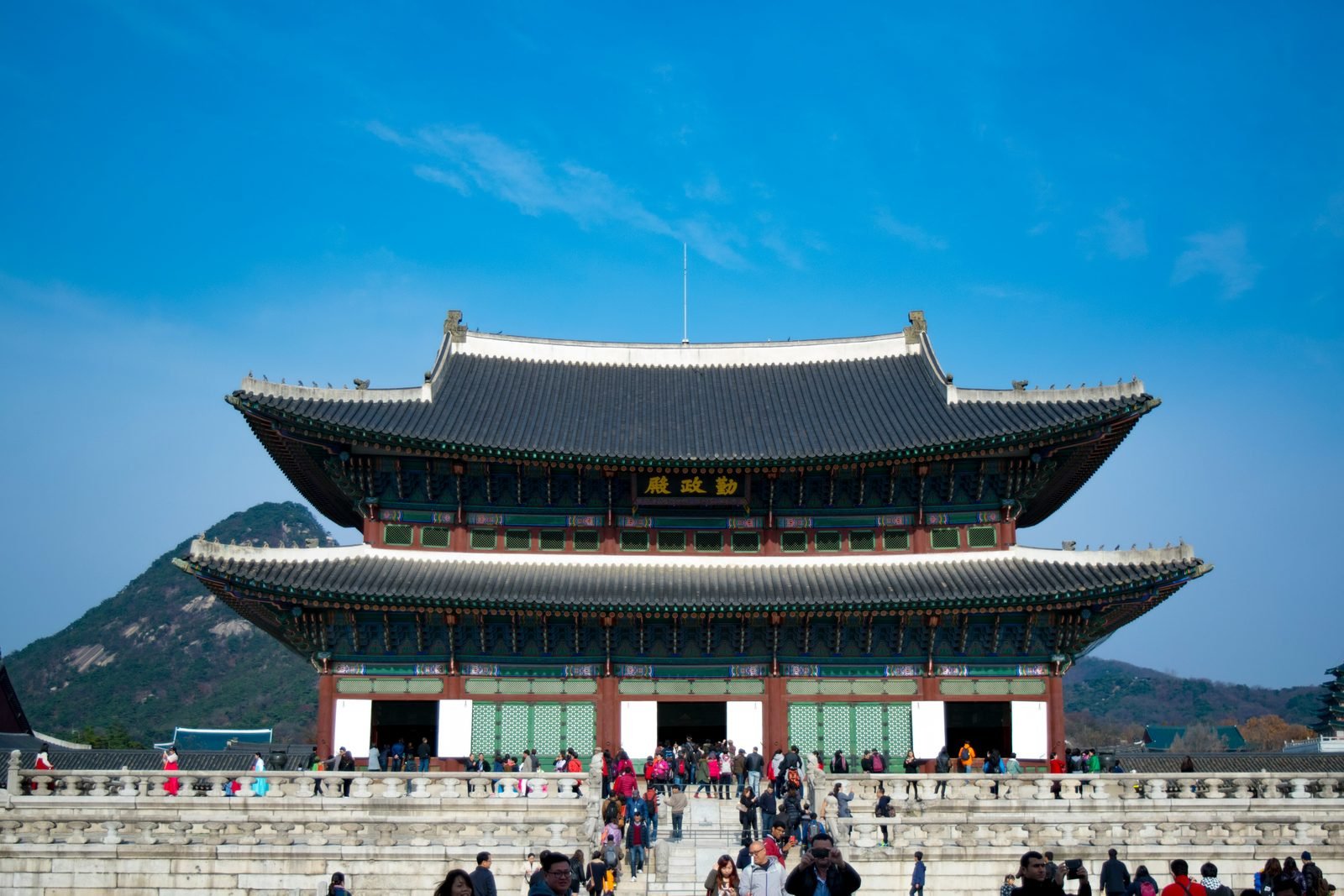
Gyeongbokgung when the gates open
VisitKorea lists the adult ticket at ₩3,000, with free entry for anyone under 19 or 65 and over. The palace is closed on Tuesdays, and a Tuesday that falls on a public holiday moves the closure to the following business day. Last admission comes an hour before closing in all three seasonal schedules, which means 16:00 in winter and 17:30 in summer. This plan only needs the palace for the morning; the palace’s hanbok rule, guard-ceremony times and layout are covered separately.
Bukchon once the Red Zone lifts
The hanok village is a short walk from the palace, and its rules decide when to arrive. Seoul’s notice bars tourists from the Red Zone on Bukchon-ro 11-gil between 17:00 and 10:00, so a palace-first morning reaches the lanes just as the restriction ends. Bukchon’s Red Zone rules and the quiet-tourism requests are laid out with their sources in the village guide. The practical consequence for Day 1 is a hard stop: whatever else is planned for the evening happens outside the village.
Put together, Day 1 is a short chain. Arrive at the palace for the 09:00 opening, give the grounds the morning, walk to the village in time for the 10:00 lift of the Red Zone or soon after, and be out of Bukchon-ro 11-gil by 17:00. In summer the palace closes at 18:30, so the village, not the palace, is the part of the day with the early cutoff.
Day Two Splits the River From the Mountain
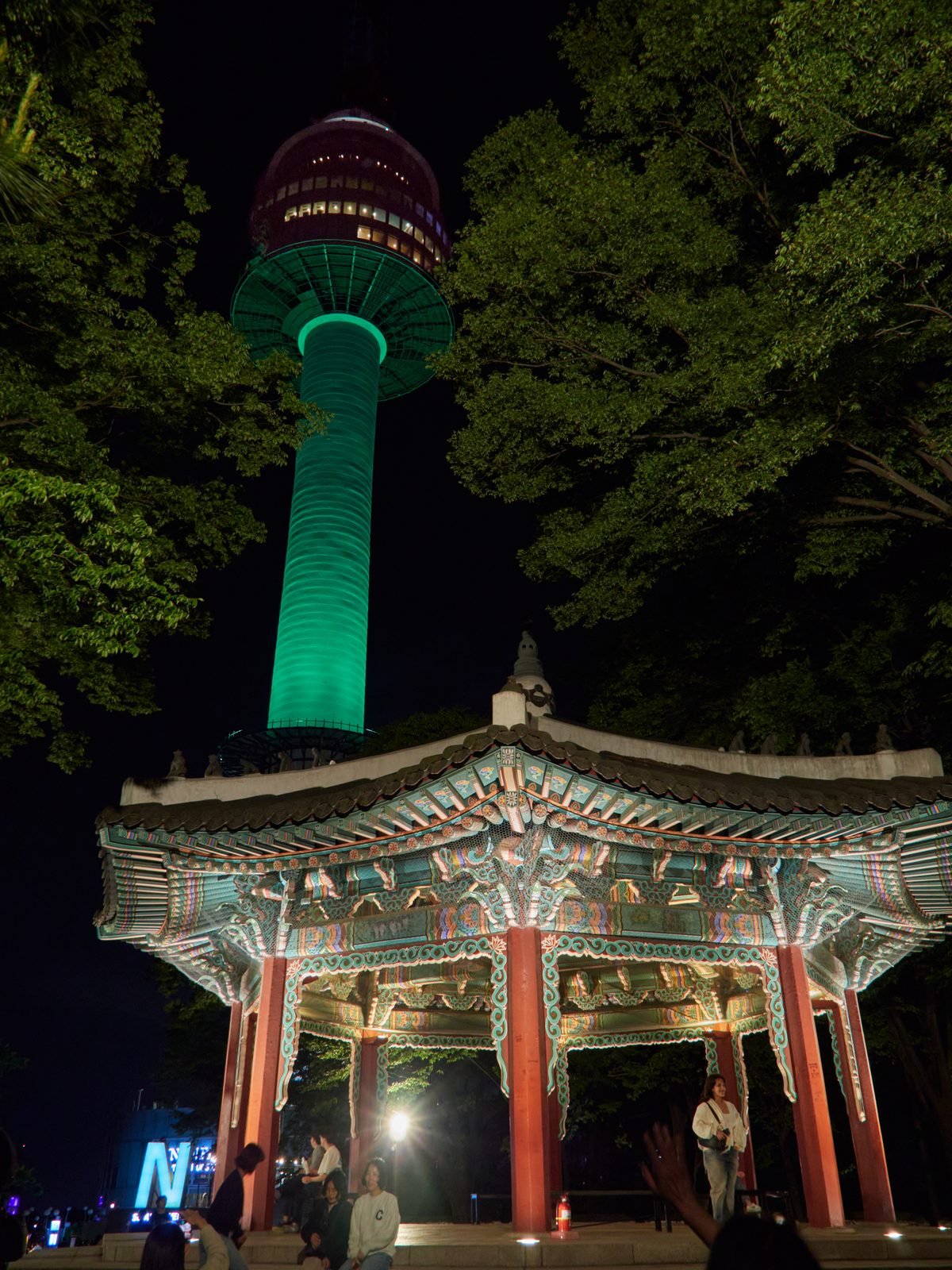
This is the flexible day, and it is built from two places that barely care what time it is. They lie in different parts of the city, so the day includes one subway ride between the river and Namsan. Visit Seoul lists Yeouido Hangang Park as open every day, around the clock, with free admission, and the cable car runs from 10:00 to 23:00, with extended operation on Friday, Saturday and Sunday depending on circumstances.
Yeouido Hangang Park, with no closing time
Visit Seoul describes the park as a public space in Yeouido, the financial district, reached from Line 5 Yeouinaru Station, Exit 3, about 213 meters away. It lists gateball courts, inline skating rinks, soccer fields and grassy areas, and says bicycles can be rented. An outdoor swimming pool operates in summer. In spring the park is known for cherry blossoms, and in autumn it hosts the Seoul International Fireworks Festival. One rule is worth knowing: the whole park is a no-fishing zone. Nearby Bamseom and the Yeouido Saetgang Ecological Park are described as well-preserved natural areas.
Because nothing here closes, the park can sit anywhere in the afternoon. A workable shape for the day is a late start, the park through the afternoon and the cable car as the last fixed point, since the ride runs until 23:00.
The Namsan Cable Car after the river
Visit Seoul puts the cable car ride at three minutes to the summit area near N Seoul Tower. Adult fares are ₩15,000 round trip or ₩12,000 one way, and children pay ₩11,500 or ₩9,000. The nearest station is Line 4 Myeongdong, Exit 4, 571 meters from the lower platform, and the page adds that a 140-meter outdoor elevator called Namsan Ormi gives easy access to the platform. For the ride itself, see how the cable car and observatory tickets split and when each one closes.
One way or round trip
The ₩3,000 gap between the one-way and round-trip adult fares is the price of the return ride. Riding up and finding another way down saves that money and gives the evening a second leg. Riding both ways keeps the plan simple after dark. The cost table uses the round trip, since it is the number that cannot fall short.

Day Three Runs Across the East Side
The last day is the one that depends on a day of the week. It starts at a market that shuts on Sunday and ends in a district whose attractions Visit Seoul groups around the market.
Gwangjang Market’s two clocks
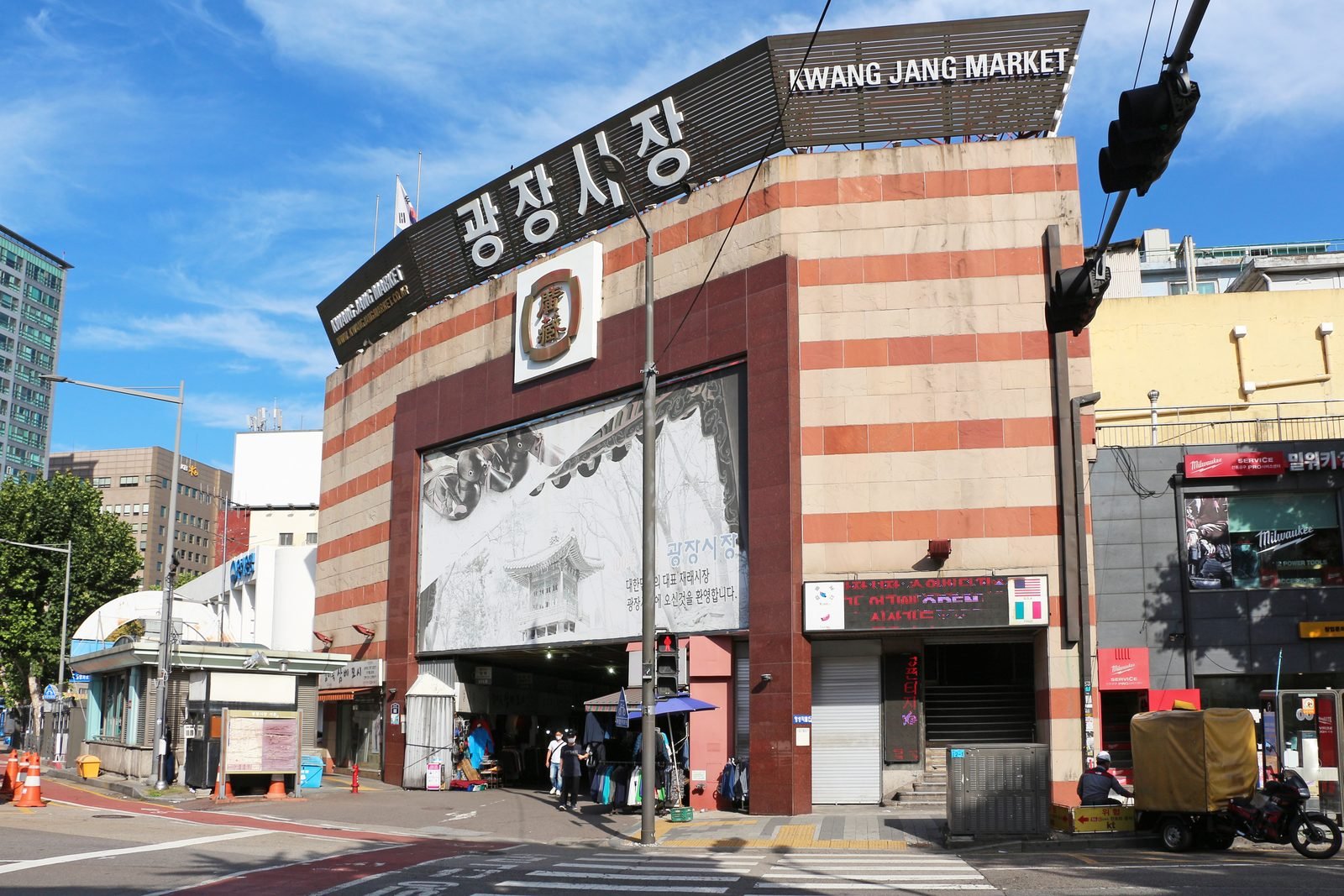
Visit Seoul lists the market at 09:00 to 18:00, closed Sundays, with the Food Alley open daily from 09:00 to 23:00 and the Guie Shopping Street open from 10:00 to 19:00, also closed Sundays. The station is Line 1 Jongno 5-ga, Exit 8, 62 meters away. The food list on that page includes bindae-tteok (mung bean pancakes), modum-jeon (assorted savory pancakes), mayak gimbap, sundae and head meat, yukhoe (beef tartare) and Korean-style meatballs, and the page says most dishes are reasonably priced. Upstairs, it points to hanbok stores and vintage clothing shops on the second floor. For a dish-by-dish look, read what the Food Alley stalls serve.
The two closing times create a simple rule for the day. Stalls and shops are a daytime matter, ending at 18:00 and 19:00, while the Food Alley is the only part that keeps going until 23:00. Anyone who arrives on a Sunday still has the Food Alley, though not the market’s clothing stores or the shopping street.
Choosing among the three neighbors
Visit Seoul names three attractions near the market: Sewoon Shopping Center, Jongmyo Shrine and Dongdaemun Design Plaza. The market’s own clock decides which one goes first. In the daytime, when the shopping street and market stalls are open, the other stops fit before or after a meal. After 18:00 only the Food Alley remains, so a late visit shifts the day toward eating.

Closing Days That Decide the Order
Two weekly closures fix the order of the days. Gyeongbokgung is closed on Tuesdays, so Day 1 cannot fall on that day, and Gwangjang Market and the Guie Shopping Street are closed on Sundays, so Day 3 loses most of its point on one. Day 2 has no such limit.
For a trip that starts on a Tuesday, the fix is to open with Day 2 and run Day 1 on Wednesday. For a trip that includes a Sunday, put Day 2 there. Public holidays add a wrinkle at the palace: when the Tuesday closure lands on a holiday, VisitKorea says the palace closes on the following business day instead, so a long weekend can move the closed day to Wednesday.
| Weekday | Day 1: palace | Day 3: Gwangjang Market |
|---|---|---|
| Monday, Wednesday to Saturday | Open | Open, including the shopping street |
| Tuesday | Closed (a holiday Tuesday opens and moves the closure to the next business day) | Open |
| Sunday | Open (Bukchon asks for a quiet Sunday) | Food Alley only |
Bukchon adds a daily limit rather than a weekly one. The Red Zone is closed to tourists from 17:00 until 10:00, so Day 1 is best planned as a morning and early-afternoon day. Seoul’s notice also asks visitors to treat Sunday as a rest day for the Bukchon alleyways, one more reason to put Day 2 on a Sunday.
Swapping Days Without Breaking the Plan
The easiest swap is the one that moves Day 2. A park that never closes and a cable car that runs until 23:00 can absorb an arrival evening, a free afternoon or a day that starts late. Day 2 therefore works as the buffer the other two days lack.
Day 3 is the least movable, since a Sunday takes away the market proper and the shopping street and leaves only the Food Alley. Day 1 comes next, with its Tuesday rule. Treat Day 2 as the shock absorber, and let the closing days place the other two. If a trip is shorter than three days, cut the Day 3 neighbors first and keep the market for a day from Monday to Saturday. A trip of two days keeps Day 1 and Day 3 and adds the cable car as an evening extra, since it runs until 23:00.
Three Days in Won, Added Up
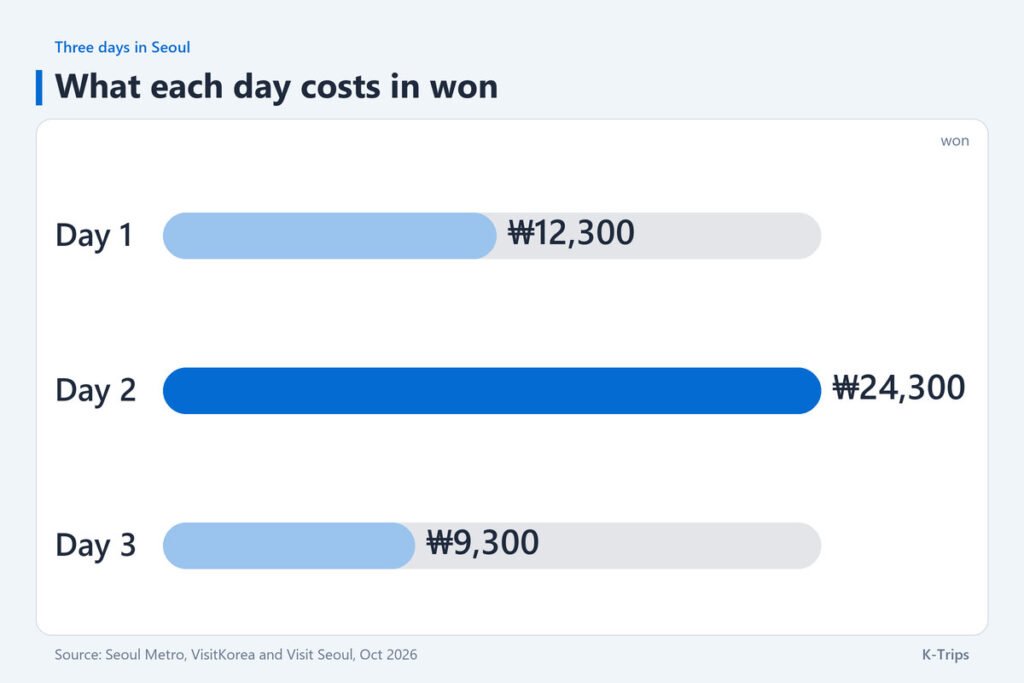
The table adds the fixed tickets and a transit assumption of six rides a day at the ₩1,550 base fare, which is ₩9,300 per day. It leaves out meals, hanbok rental and any rides past the 10-kilometer line.
| Day | Fixed tickets | Transit, six rides | Day total |
|---|---|---|---|
| Day 1 | Gyeongbokgung ₩3,000 (free under 19 and for 65 and over) | ₩9,300 | ₩12,300 |
| Day 2 | Cable car round trip ₩15,000, Yeouido Hangang Park free | ₩9,300 | ₩24,300 |
| Day 3 | Gwangjang Market free to enter, food paid by the plate | ₩9,300 | ₩9,300 |
| Three days | ₩18,000 | ₩27,900 | ₩45,900 |
The cheapest day is the market day, and the most expensive is the one with the cable car. A one-way ticket on Day 2 would bring the total to ₩42,900. The N Seoul Tower observatory is a separate ticket and is not counted here. Even with the cable car, the fixed tickets for the whole plan come to ₩18,000 per adult.
Riders who pay with single-use tickets instead of a transportation card add ₩100 to each journey. On six rides a day that is ₩9,900 a day and ₩29,700 over three days, ₩1,800 more than the card figure in the table. It is a small amount, but it is also the kind of overhead that the district plan makes easy to see and easy to avoid.