
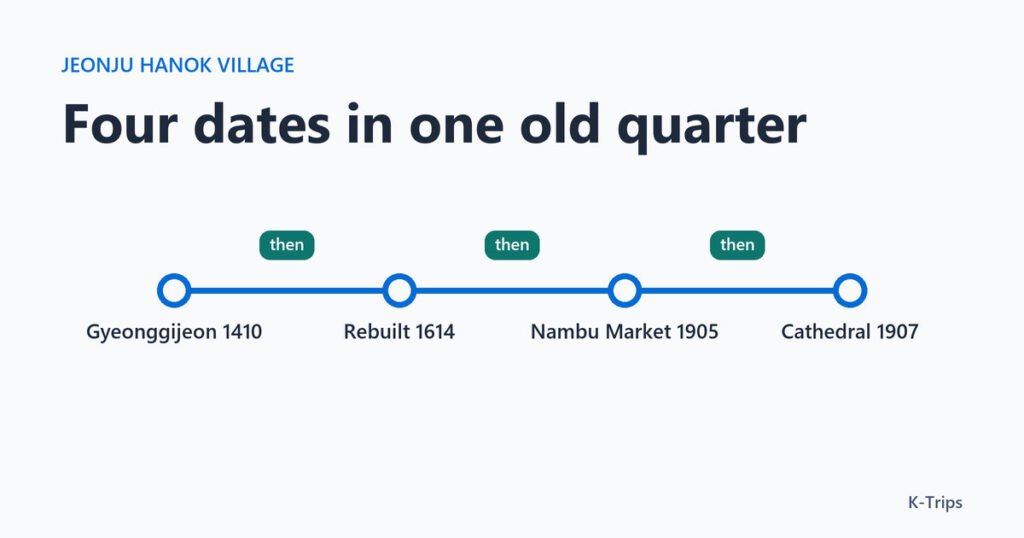
More than 700 hanok buildings stand in Pungnam-dong, the Jeonju neighborhood that the Korea Tourism Organization singles out as one of the few places where traditional houses survived the rise of apartment blocks. Around it sit a royal shrine founded in 1410, a Romanesque cathedral begun in 1907 and a market that became a regular public market in 1905.

What Remains of Old Jeonju
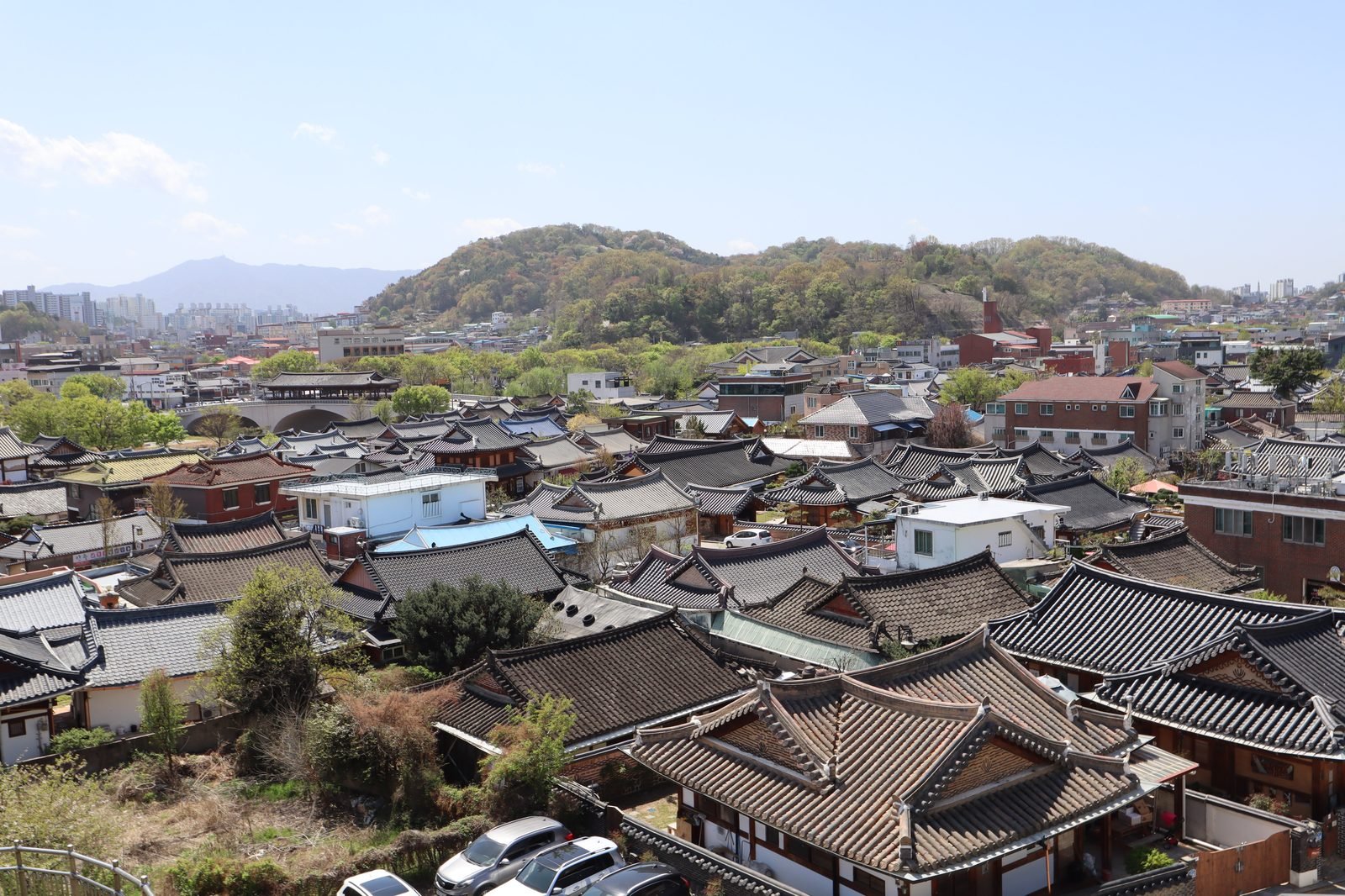
Hanok are traditional Korean houses, and the tourism organization’s feature on Jeonju Hanok Village is blunt about their fate elsewhere: since the 1970s most of them have disappeared because of the rise of apartment buildings. Jeonju is described as one of the few cities where hanok remain intact, and the village keeps a working mix of history and activity. The historic sites include Gyeonggijeon Shrine, the Omokdae Historic Site, the local Confucian school and Jeondong Catholic Cathedral, while visitors can try calligraphy, pansori, moju making, a hanbok experience and hanok stays.
The same feature adds a detail that explains the streets full of costumed visitors: compared with other cities, Jeonju has more hanbok rental shops and a wider choice of hanbok types. The page’s emphasis is the setting. The alleys, with stone walls and tiled roofs, are named as the backdrop for hanbok photos, which is why a walk here is as much about the streetscape as about any single ticketed site. A heritage day from an older dynasty than Joseon is a different kind of outing, and the Silla-era terraces at Bulguksa in Gyeongju are the place to start.
Gyeonggijeon, Where the Joseon Founder’s Portrait Is Kept
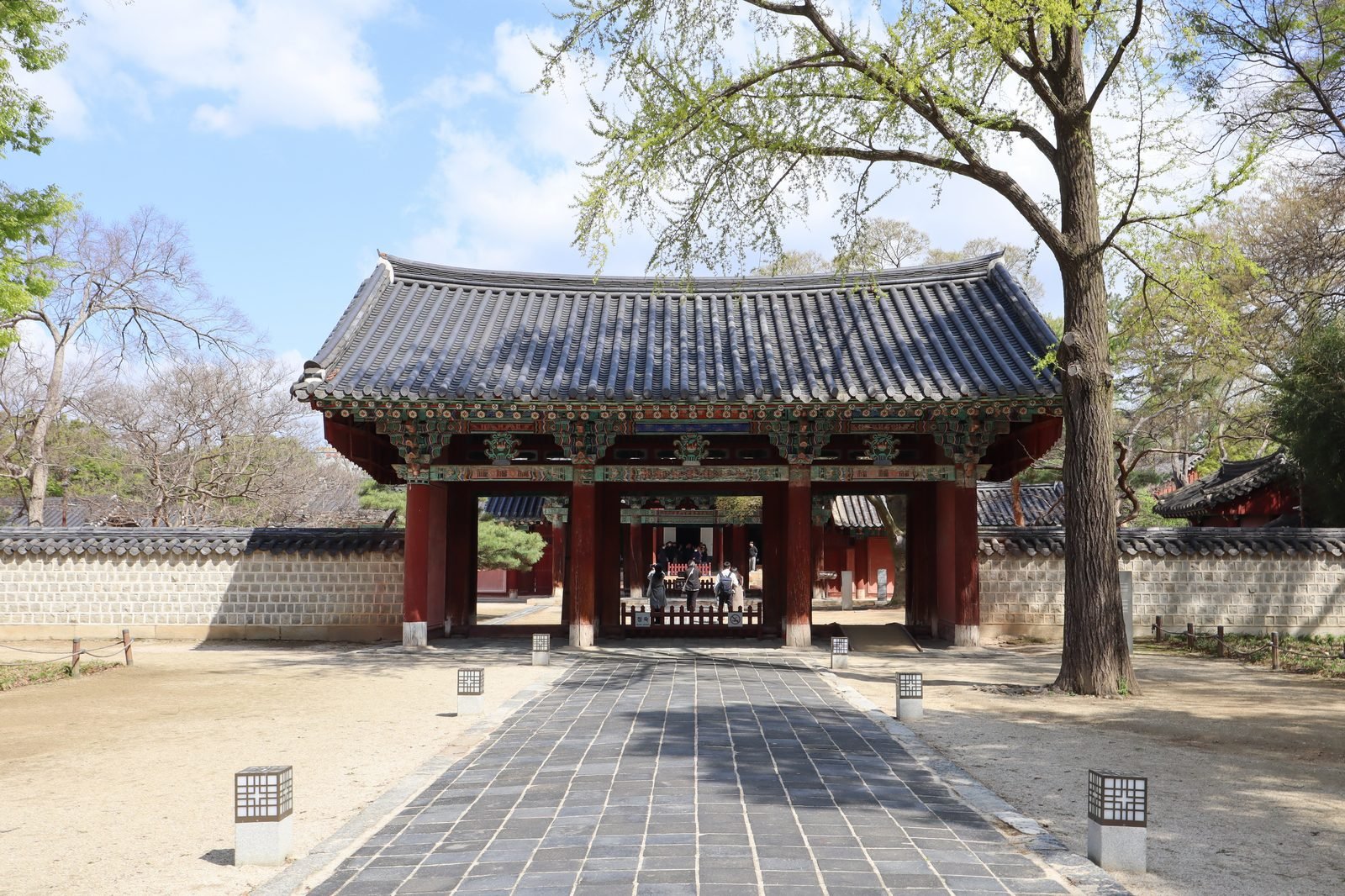

The shrine is the one ticketed stop in the district. Jeonju City’s tourism pages record that royal portrait halls called Eoyongjeon were set up in 1410 in Jeonju, Gyeongju and Pyongyang to enshrine King Taejo, Yi Seong-gye, and that the Jeonju hall was later renamed Gyeonggijeon in the reign of King Sejong. It burned in the Imjin War and was rebuilt in 1614. The site, Historic Site No. 339 since 9 January 1991, covers 49,590 square metres and centres on the main hall, which holds Taejo’s portrait, and includes Jogyeongmyo Shrine, built in 1771 for the ancestral tablets of Yi Han, the founder of the Jeonju Yi clan. The Jeonju Archive, which stored the Annals of the Joseon Dynasty, is to the east, and Jogyeongmyo and the Royal Portrait Museum lie to the north.
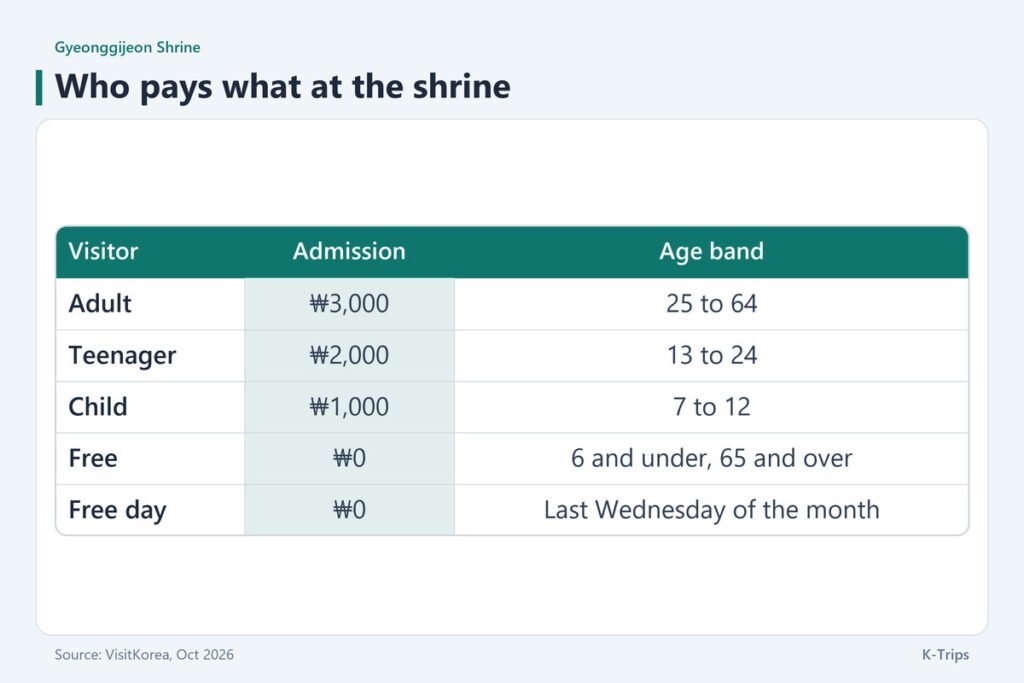
The city’s page describes a bamboo forest, stone walls, pine groves and plum trees in harmony with the hanok architecture, with a walk in through the red gate to the main hall, and says the shrine runs cultural programmes through the year. It also mentions a night program called Walk with the King, with illuminated grounds and storytelling. Hours and fees come from VisitKorea’s listing. The shrine opens at 09:00 and closes at 19:00 from March to May and again from September to October, at 20:00 from June to August, and at 18:00 from November to February. Last admission is one hour before closing, and the listing shows no weekly closing day. Adults aged 25 to 64 pay ₩3,000, teenagers 13 to 24 pay ₩2,000 and children 7 to 12 pay ₩1,000. Entry is free for children aged 6 and under, for visitors 65 and over, and for everyone on the last Wednesday of the month.
Seoul’s palaces work differently. The Gyeongbokgung ticket and hanbok rules let visitors in a complete hanbok walk in free, but the Gyeonggijeon listing mentions no such exemption, so renting a hanbok here is for the photographs and not for the ticket. The listing’s own advice is to pair the shrine with Jeondong Cathedral.
Jeondong Cathedral, Omokdae and the Confucian School
The cathedral is the one building in the district that does not look like a hanok, and the tourism feature explains why it matters. It was built over seven years starting in 1907, it was the first Romanesque and Byzantine style building in Honam, and it is counted among the three largest cathedrals in Korea along with Myeongdong in Seoul and Gyesan in Daegu.
Omokdae is the viewpoint. It sits on a hilltop and gives a panoramic view across the tiled roofs of the village, and it is also where King Taejo is said to have celebrated his victory over the Japanese army at Hwangsan. Nearby, the Jeonju local Confucian school dates to the reign of King Gongmin of Goryeo and includes a two-story pavilion called Manhwaru, Daeseongjeon Shrine and Myeongnyundang Lecture Hall. Pungnammun Gate, the southern gate of the old Jeonju fortress, was the only one of the four gates left when the fortress was demolished in 1905. The feature dates its construction to 1389, while the city’s pages record that it was rebuilt after a fire in 1767 and designate it Treasure No. 308, so the surviving structure is the later one.
None of these three stops has a ticket line in the listings, which is why they fit around the shrine and the market instead of driving the day.
Nambu Market, From Dawn Soup to the Night Stalls
The market began as the Nammunbakk Market, outside the south gate, and VisitKorea’s listing says it became a regular public market in 1905. It counts about 800 shops, selling silk fabrics, furniture, dried seafood, vegetables, fruit and medicinal herbs. Young people have revived part of it: on the second floor of Building 6, once lined with empty shops, a youth mall now resembles the atmosphere of Seoul’s Samcheong-dong and Hongdae. The listing gives hours of 09:30 to 23:00 and adds that they vary by store.
The night market runs every Friday and Saturday, according to the same listing, and is known for blood sausage set meals, savory mung bean pancakes and bibimbap rolls. For early risers the city’s page on the market describes a street market, the Dawn Goblin Market, which trades from 4 to 10 in the morning around Sajeondari Bridge and Cheonbyeon Stream, with fresh produce from wholesale markets and snacks such as fresh fried donuts and noodles.
The same page is the best explanation of what to eat at breakfast. Jeonju bean sprout soup with rice is made by cooling boiled bean sprouts and rice in a bowl and then pouring hot broth, made with dried anchovies and kelp, in and out of the bowl. It is eaten with a poached egg, sesame oil and roasted laver, and the page pairs it with moju, the herbal rice liquor. Pisundae, a blood sausage stuffed with vegetables, meat and clotted blood but no glass noodles, is the other market signature, described as softer and thicker than sundae elsewhere. Roasted laver, grilled on site by many of the market’s shops, is part of the bean sprout soup routine.
Stringing the Day Together
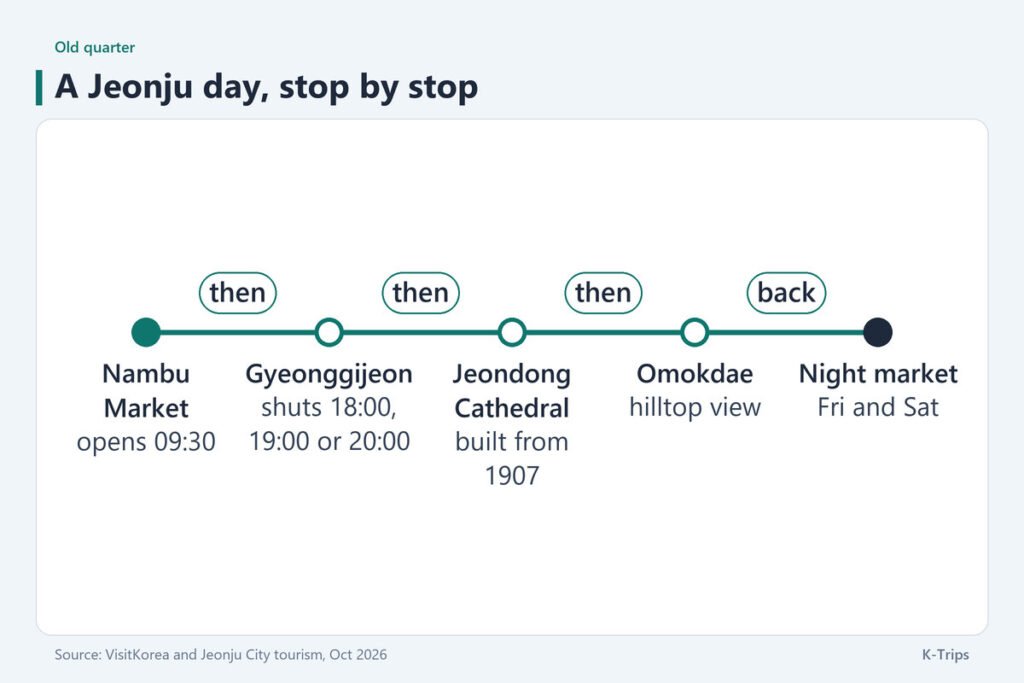
Begin where the clock starts earliest. The dawn market is for people up before 10, the main market opens at 09:30, and a bowl of bean sprout soup there sets up the morning. The shrine opens at 09:00 but its last admission falls an hour before closing, so there is no reason to rush it: take it mid-morning or early afternoon, then use the cathedral and the Omokdae viewpoint for the hours when the ticketed site is winding down.
Finish by going back to the market only on a Friday or Saturday, the two evenings the night market is listed; on any other day, end at the viewpoint. This order also keeps the one ticketed stop, the shrine, in the middle of the day, where a late start cannot cost you the ticket.
Where a Jeonju Afternoon Goes Wrong
The first mistake is arriving at the shrine in the last hour. Because last admission is one hour before closing, a winter visit that ends at 18:00 stops selling entry at 17:00, and the shorter days of November to February leave the least room. Aim to be inside well before that, and let the market or the viewpoint take the late hours.
The second mistake is planning the night market for any evening. The listing names Friday and Saturday only, so a Thursday plan built around blood sausage sets and mung bean pancakes will find the lights off. Check the weekday before booking a late train, and confirm with the market’s phone line at +82-63-284-1344 if your dates are close to a holiday.
The third is paying when you did not need to. The shrine is free on the last Wednesday of each month and for ages 6 and under and 65 and over, so a family with a toddler or a grandparent may owe less than the adult price suggests. Two adults aged 25 to 64 and a 10-year-old pay ₩3,000 twice and ₩1,000 once, ₩7,000 in all, and a grandparent over 65 adds nothing.