
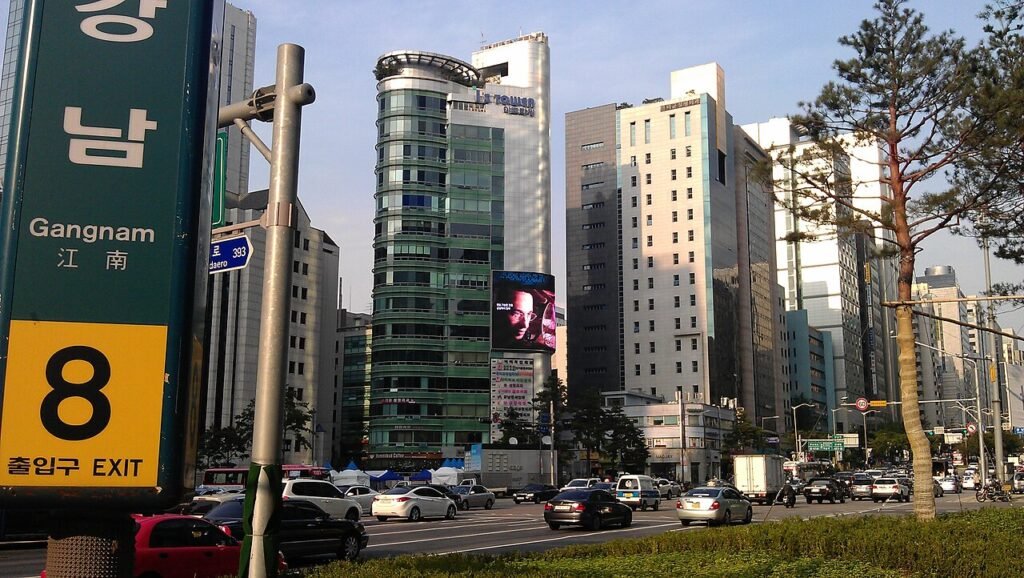
The Gangnam in music videos is glass towers, franchise coffee, and a single glowing intersection. The Gangnam that office workers and longtime residents actually eat in is a different map entirely — squid tanks in Gwanak-gu, a slow bakery tucked into Yangjae’s café row, a lunch-set noodle shop steps from the station crush. “Gangnam” literally means “south of the river,” and the district earns that plain, unglamorous name once you look past the boulevard: it is a wide stretch of southern Seoul with its own neighborhoods, each eating on a completely different schedule.
South of the River Has More Than One Gangnam
Treat “Gangnam” as one place and you will spend a trip circling the same few blocks around Gangnam Station. Treat it as three or four distinct neighborhoods strung along Line 2, and a very different kind of day opens up — one that runs from a quiet café in Seocho to an unglamorous seafood specialist a few stops west in Gwanak-gu, with the station itself as the easiest, most crowded stop of the three. None of these places needs a reservation or a translator to enjoy properly, and none of them appears on the standard first-timer’s Gangnam itinerary.
Sadang and Gwanak: The Seafood Edge of the District
A few Line 2 stops west of the Gangnam core, Gwanak-gu is where the district’s polish thins out and its clientele shifts from tourists to neighbors — which is exactly why its seafood is worth the detour.
Cheongsongsanojingeo: Live Squid the Way Locals Order It
The name does the ordering for you: san-ojingeo means live squid, and this specialist near Sadang Station serves it straight from the tank, sliced with speed and confidence, still tasting of the sea rather than the fridge. Waiting for a table is common — the restaurant is small and well known locally — and the standard order is either the sliced raw squid or the steamed version, both sized for two to three people and priced from roughly 52,000 to 64,000 won depending on the cut. The reliable move at any live-seafood counter like this one is to ask what’s good today — “oneul mwoga joayo?” — and let the answer become your order. It sits at 서울 관악구 남현1길 8, about a five-minute walk from Sadang Station exits 5 or 6, and is closed on Sundays and during the government’s spring squid fishing ban in April, so check before making a special trip.
Yangjae and Seocho: Where Gangnam Slows Down for Coffee
Every stretch of southern Seoul needs a coffee stop, and this one belongs to the Yangjae side of Seocho-gu, along the café row that runs beside Yangjaecheon stream. Seoul’s café scene south of the river runs quieter and more grown-up than the Instagram circuits closer to Hongdae or Seongsu, and a slow bakery visit here is that scene at its best.
Akso: A German-Style Bakery Worth the Detour
Akso bakes German-style bread and pastries rather than the sweeter Korean-style options common elsewhere, and it draws a loyal local crowd for exactly that reason — the bread, not the hashtag. It sits at 서울 서초구 양재천로 19길 14, about a ten-minute walk from Yangjae Simin-ui-Sup Station, and runs from roughly 10:00 to 21:00 daily except Sunday, when it is closed (checked September 2026). The standing advice for any bakery this popular applies here too: order the signature loaf with a hand-drip coffee, and arrive before noon on weekends, because the best-selling bakes tend to disappear by early afternoon.
Right at Gangnam Station: Lunch Sets and the Office Crowd
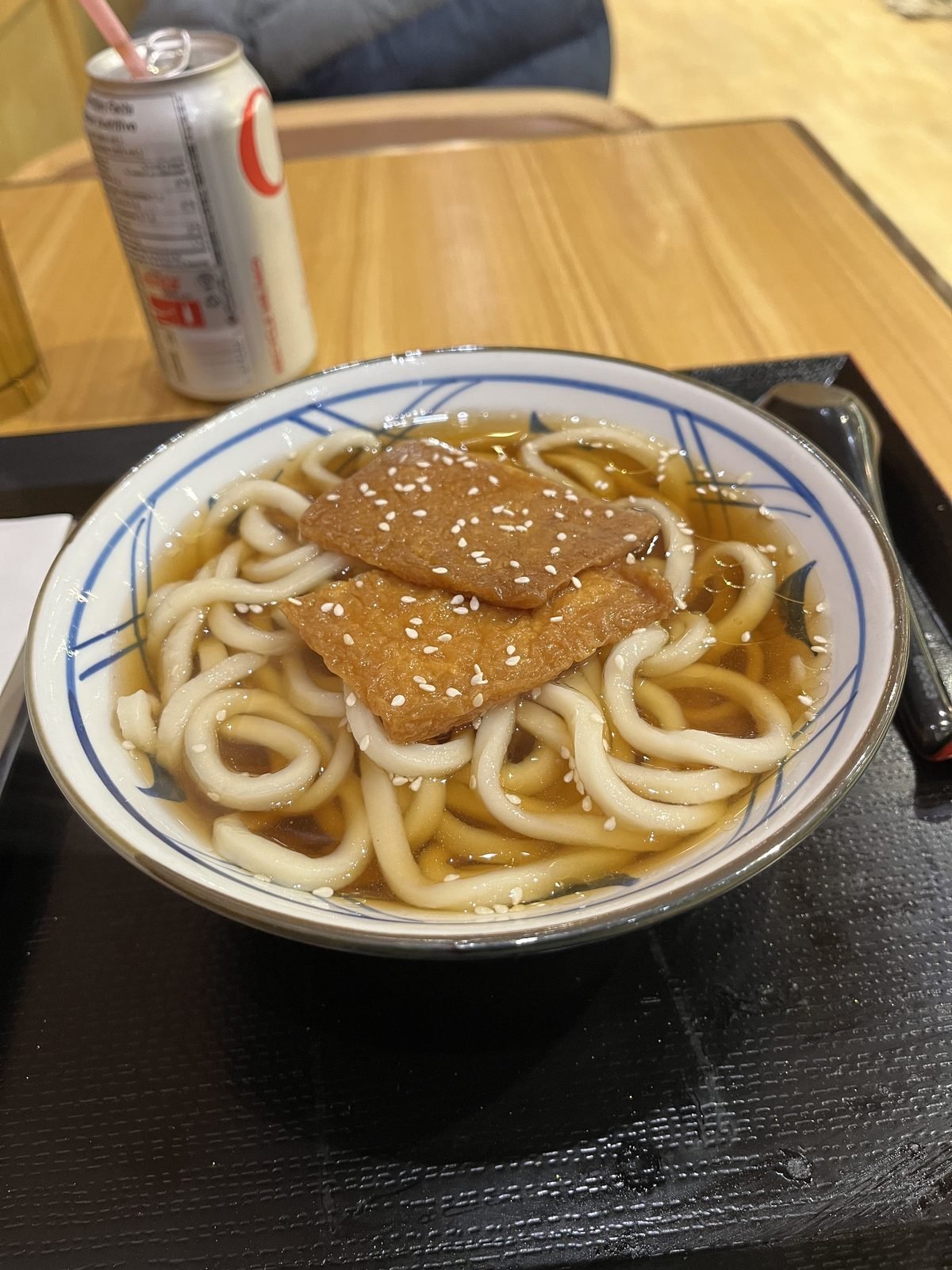
Korean signboards rarely waste words, and this one names both of its specialties outright: udon and gyoza. The Gangnam branch sits close enough to Gangnam Station, one of the busiest subway interchanges in Seoul, to be the easiest stop of the three by a wide margin, which makes it the natural reset point after a morning of errands around the district.
Yomi Udon Gyoza: The Easiest Stop on the Map
Korea takes Japanese comfort food seriously, and this kitchen’s version is chewy noodles, clean broth, and pan-crisped dumplings, executed by a kitchen that does a small menu and repeats it well. It runs Monday to Saturday 11:00–21:00 and Sunday 11:00–20:30, with a break in the mid-afternoon on both schedules, at 서울 강남구 강남대로 110길 13. Lunch sets are the value play here — the same kitchen working at a fraction of the evening price — so expect a heavy office-worker surge from noon to one, and expect counter seating to be one of the more comfortable solo-dining formats in this part of Seoul.
What a Meal in Gangnam Actually Costs
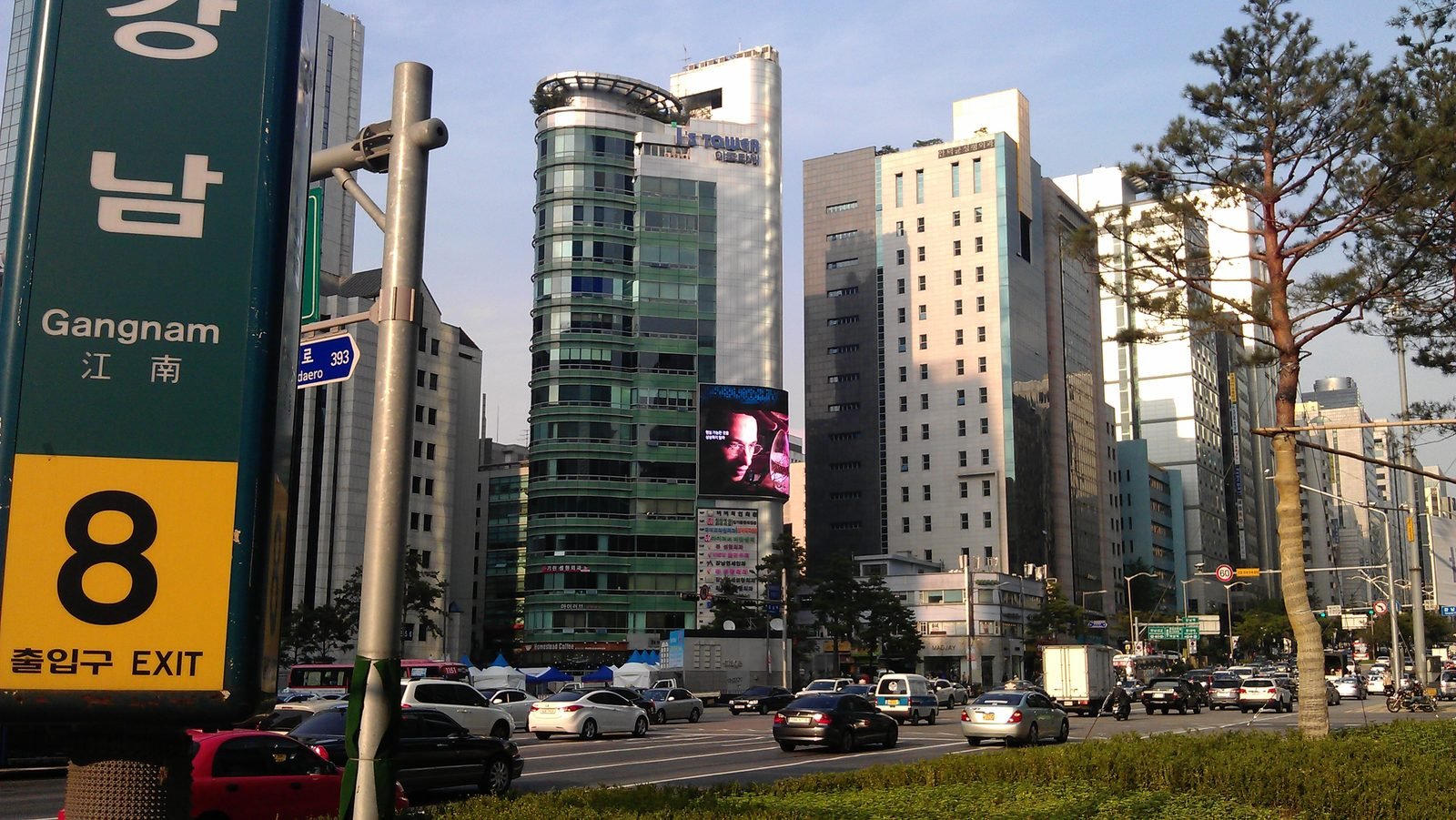
Gangnam has a reputation as an expensive place to eat, and at the top end that reputation is accurate — the district holds the highest concentration of Michelin-recognized restaurants in Seoul. Away from that tier, though, an everyday meal here costs roughly what it does anywhere else in the city, and knowing which category a restaurant falls into before you sit down avoids most of the sticker shock.
Lunch Sets vs. the Michelin End of the District
A casual Korean lunch set across Seoul typically runs 10,000 to 25,000 won, and Gangnam’s office-district lunch sets — like the ones at Yomi Udon Gyoza — sit inside that same band rather than above it. The gap opens at dinner and at the district’s tasting-menu restaurants, where a Michelin-recognized meal can run anywhere from 50,000 to well over 150,000 won per person. The middle ground — a live-squid dinner for two, or a proper Korean barbecue spread — usually lands somewhere between those two extremes, and asking the price before a live-seafood vendor starts cutting is the easiest way to keep it there.
Reading the Room: Menus, Pointing, and Solo Tables
Assume the café and the udon-and-gyoza shop will have English menus or at least photos, and assume the seafood specialist will not — which is part of its charm rather than a barrier. Browsing a restaurant’s photo menu on Naver Map before you arrive, then pointing and asking what’s good today, has never failed as a strategy at any of these three — the same table bell and self-service habits covered in our guide to ordering food in Korea apply here exactly as they do anywhere else in the city. Treat the prices and photos you find there as a rough guide rather than a quote, since much of that content is uploaded by other diners and can be a season or two out of date. Solo dining is comfortable at the café and the noodle shop, where counter seating is built for one; live squid is a communal format better suited to a table of two or more, since the portions and the ordering rhythm both assume company.
Raw and Live Seafood: What First-Timers Should Know
Eating raw or live squid for the first time makes some visitors hesitate, but at a busy specialist with high turnover — exactly what a place like Cheongsongsanojingeo is — it is simply a normal meal that Koreans eat constantly. Chew thoroughly, follow the table’s lead on dipping sauces, and treat the freshness as the whole point rather than a risk to manage. If raw seafood is not for you at all, the same restaurants that serve it live almost always offer a steamed or cooked version of the same squid, so the format does not have to be a dealbreaker for the rest of the meal.
Turning Three Stops Into One Southern Day
An honest note on the map: these three do not make a walking route. They make a day with the subway as connective tissue, running from a quiet morning to a loud, hungry evening.
The Line 2 Route, Stop by Stop
Start at Akso for a slow late morning near Yangjae Simin-ui-Sup Station, ride Line 2 toward the Gangnam Station branch of Yomi Udon Gyoza to dodge the worst of the lunch peak, then continue west on Line 2 toward Sadang for a live-squid dinner as the day winds down. Each leg runs ten to twenty minutes by subway, and none of the three requires more walking than a short stroll from the nearest exit.
The One Question Worth Asking Before You Go
Do any of these three need a reservation? No — all three are walk-in, though the café and the seafood specialist both get genuinely busy at predictable times. Akso’s best bakes sell out by early afternoon on weekends, so arrive before noon if you want the full selection, and Cheongsongsanojingeo often has a short wait during dinner hours simply because it is small and well liked by its neighborhood. Yomi Udon Gyoza is the most forgiving of the three: its lunch-set format and counter seating turn tables quickly enough that a short wait rarely becomes a long one.