
Every city has a neighborhood where the young people quietly decide what everyone else will be wearing next year. In Seoul, that job belongs to Hongdae Street. The blocks fanning out from Hongik University — home to the country’s most famous art school — are a rolling experiment in style: street art on the shutters, dance crews on the corners, beauty stores stacked with releases that haven’t reached the airport duty-free yet. Myeongdong may be where tourists shop for K-beauty, but Hongdae is where the trends get road-tested first, on students with sharp eyes and thin wallets.
What Makes Hongdae Street Different
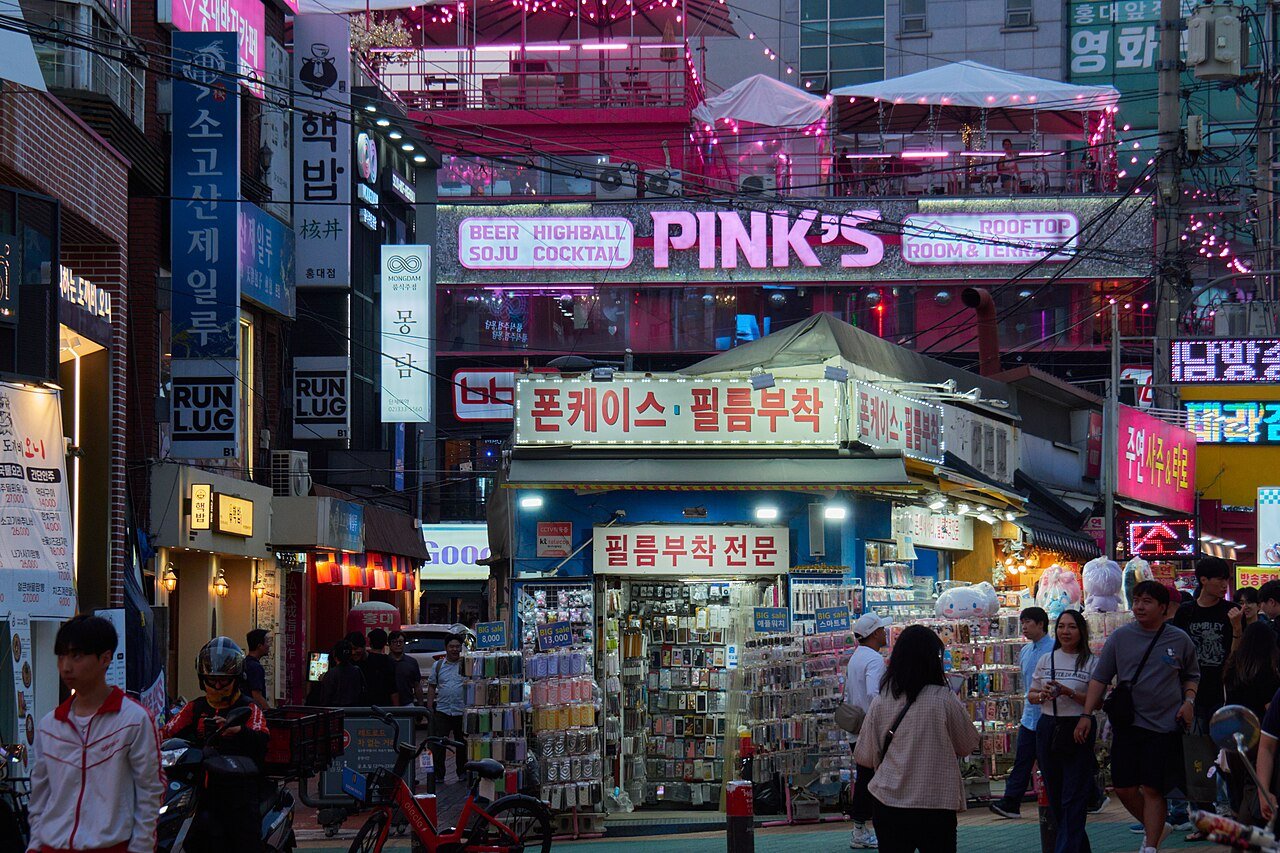
The area runs on university energy. Because Hongik University specializes in fine art and design, the neighborhood has spent decades absorbing its graduates — illustrators, indie musicians, tattooists, fashion kids — and it shows in everything from hand-painted signboards to the murals along the side streets. The main pedestrian drag is loud, bright, and fun, but the real character lives one layer deeper: this is the heart of Seoul’s street art and indie culture, a place that never fully switches off. The street itself effectively runs around the clock, with the club-lined stretch going until dawn on Fridays and Saturdays.
Beauty Shopping on Hongdae Street
For K-beauty, Hongdae has quietly become the smarter alternative to the tourist districts. The big chains — Olive Young above all — run large, well-stocked branches here, and because the clientele is mostly local twenty-somethings, shelves lean toward what is actually trending in Korea right now rather than what sells to tour groups. Testers are everywhere, staff are used to browsers, and weekday afternoons are calm enough to actually think. Between the chains you’ll find one-brand road shops, budget nail bars, and hair salons that treat experimental color as a basic human right. If a product is about to blow up on Korean social media, odds are a Hongdae shelf stocked it first.
Vintage and Streetwear Alleys
The main strip is franchises; the finds are in the alleys. Locals will tell you the real Hongdae starts when you drift away from the main gate and down the lanes that slope toward Sangsu Station — that is where the vintage shops, secondhand racks, and small streetwear labels hide, along with the restaurants residents actually eat at. Prices drop and originality rises the further you get from the crowds. Keep drifting northwest and you hit Yeonnam-dong and the park built over the old Gyeongui rail line, where browsing turns into café-hopping without you noticing the transition.
Busking Nights and K-Pop Energy
Come back after dark on a weekend and Hongdae turns into an open-air stage. The busking here is genuinely world-class — singer-songwriters, dance crews running full K-pop choreography to a ring of phone lights, the occasional act that makes you wonder why they aren’t signed yet. It is free, it is communal, and it is the single best way to feel why this neighborhood matters to Korean pop culture. Plenty of idols and actors passed through these streets before they were famous. If watching a cover crew nail BTS choreography stirs something in you, the day trip to the BTS bus stop in Jumunjin is the natural next chapter — and Hongdae’s photogenic lanes turn up constantly on screen, as our guide to K-drama filming locations in Seoul shows.
How to Get There
Take Line 2 to Hongik University Station and use Exit 9 — the street starts about a minute from the stairs. The same station is on the AREX airport line, so you can be browsing beauty shelves well under an hour after leaving Incheon Airport. For the quieter, more interesting end of the neighborhood, Sangsu Station (Line 6) or Hapjeong Station (Lines 2 and 6) drop you straight into the alleys.
Best Time to Visit
Split the difference: weekday afternoons for unhurried shopping, Friday or Saturday evening for busking at full volume. Most shops open late morning and run to around 10 p.m., while street life continues long after. Cards and phone payments work everywhere, and larger beauty stores handle tax refunds for foreign visitors — bring your passport if you plan a haul.
Good to Know
- Hongik University Station (Line 2, AREX) Exit 9 puts you at the top of the street in about a minute.
- The street never really closes; shops mostly run late morning to about 22:00, clubs until dawn on weekends.
- Busking peaks on Friday and Saturday evenings — arrive by 8 p.m. for a good spot.
- The alleys toward Sangsu Station hide the best vintage shopping and local restaurants.
- Bring your passport for tax refunds on bigger beauty purchases.
Hongdae Street FAQ
Is Hongdae Street worth visiting during the day?
Yes — daytime is actually better for the beauty stores, vintage alleys, and street art, all without the evening crush. Think of it as two different neighborhoods sharing an address: shopping by day, performance by night.
Hongdae or Myeongdong for K-beauty shopping?
Myeongdong wins on sheer flagship scale and tourist services; Hongdae wins on calm, local trends, and the fun of shopping alongside the people the products are actually aimed at. If you have time, do both — they are twenty minutes apart.
Is Hongdae safe at night?
By big-city standards, very. The streets stay crowded and well-lit into the small hours. Standard nightlife common sense applies, and the last Line 2 trains leave around midnight — after that it’s taxis.
Give Hongdae an afternoon and an evening and it will hand you back a shopping bag, a camera roll, and at least one song stuck in your head. It also makes a perfect free evening inside our 3 days in Seoul itinerary.