
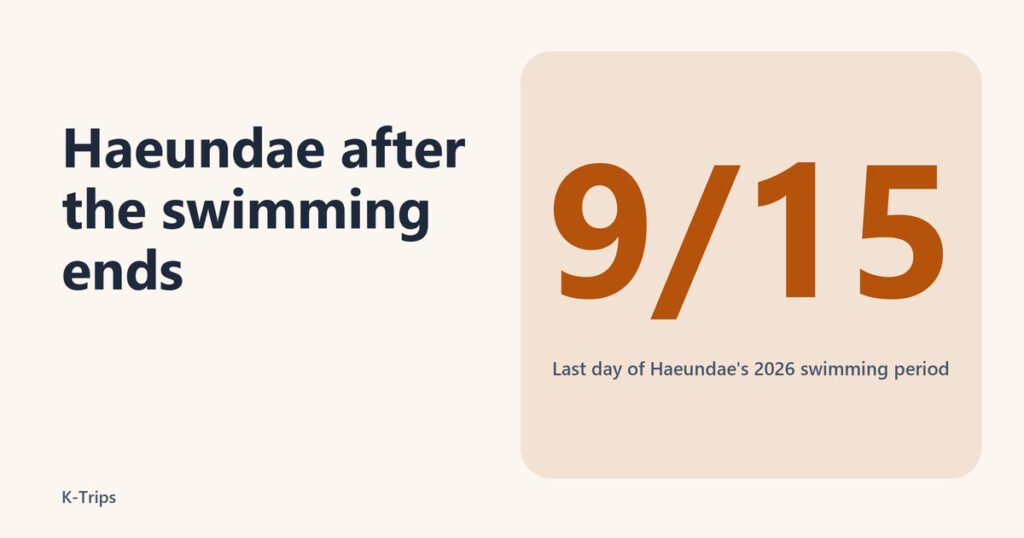
At 18:30 on an October evening the sky capsules above Haeundae’s coastline stop running, an hour earlier than in September, while the beach train beneath them carries on until 19:30. On the sand the calendar is just as exact: the 2026 swimming period closed on September 15, and a beach that Visit Busan says draws more than 10 million visitors in a summer season goes back to being a long walk beside the sea.
That is the sense in which Haeundae feels like a different place in October. Nothing has closed for good, but the clocks have changed, and what is free, what is ticketed and what shuts by early evening all differ from the July version.

What Closes When September Ends
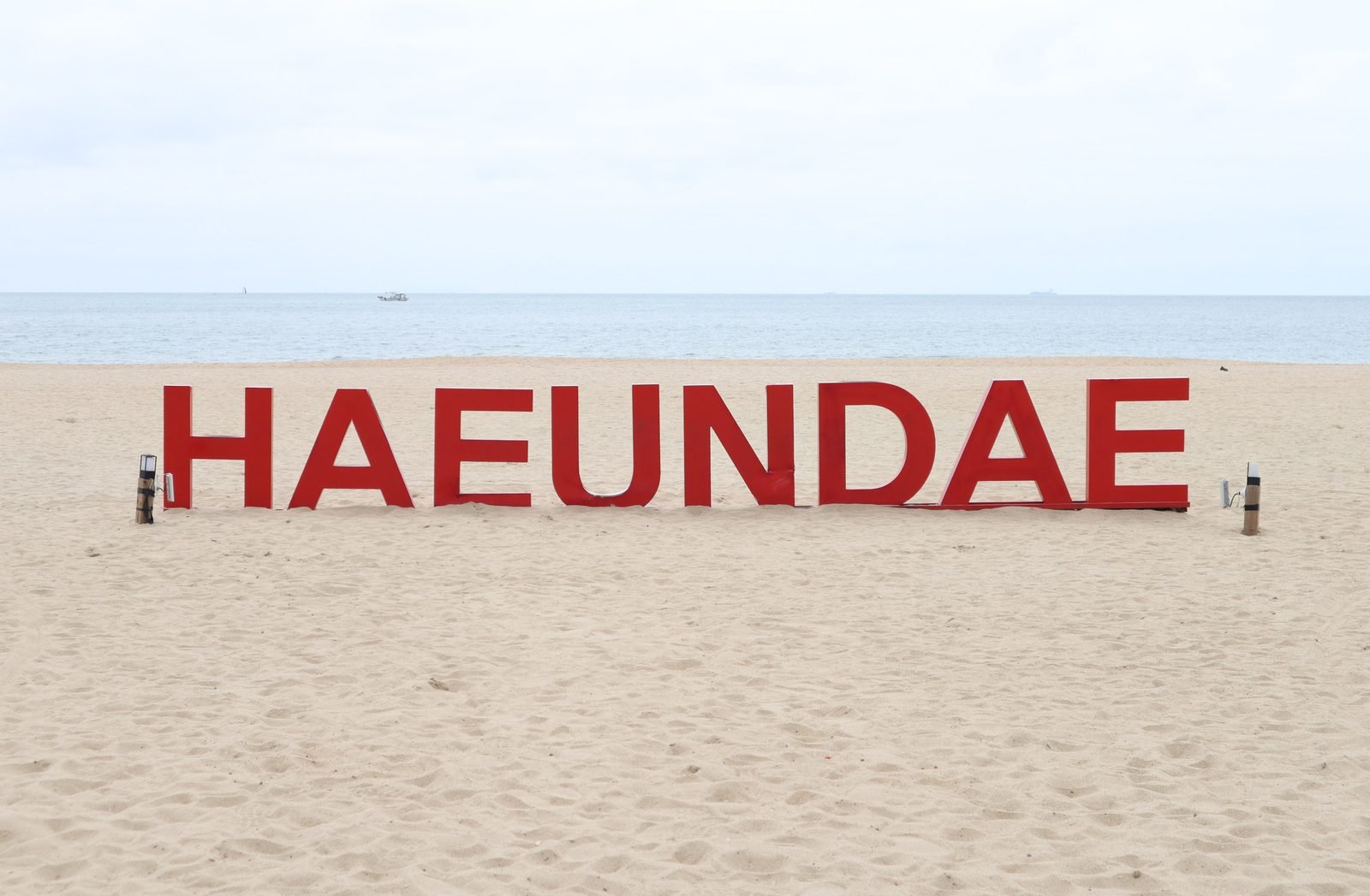
Visit Busan’s 2026 beach schedule opened Haeundae on June 26 and closed it on September 15. Songjeong ran from June 26 to August 31, and Gwangalli, Songdo, Dadaepo, Ilgwang and Imnang from July 1 to August 31, so Haeundae has the longest swimming period of the seven beaches listed, by at least two weeks. The page tells visitors to check the opening period before they go, and it asks them to sort their rubbish into the designated places and keep audio devices quiet.
The big calendar events fall earlier. Visit Busan lists the Busan Sea Festival in July, and VisitKorea places the Haeundae Sand Festival every year between May and June; in 2026 it ran from May 15 to 18, and its sculpture exhibition stayed open to June 14. By October none of these is on, which leaves the beach itself, listed as free to enter, and the question of what to do around it. A cold, windy afternoon on the sand often ends indoors, and the guide to a bathhouse, a jjimjilbang or a spa explains the three kinds of warm room a visitor will find.
Exit 5 and the Walk to the Water
Visit Busan gives the walk from Haeundae Station on Line 2 as 15 minutes from Exit 5. Buses 139, 307 and 1003 stop at the beach itself, and a beach parking lot is listed. The page describes 1.5 kilometers of white sand, which is the length to keep in mind when October’s quiet looks surprising next to the summer figure. Behind the sand, the page says, Haeundae Traditional Market is known for affordable gukbap, a rice soup, and the Gunam-ro Culture Square holds performances and events every weekend.
Haeundae is also the opening stop of the two-day Busan plan that starts on its sand, which pairs the beach with a temple on the shore and, on Saturday nights, the bridge at Gwangalli, where the free drone show over the beach adds a reason to cross town.
Dongbaekseom at the Western End
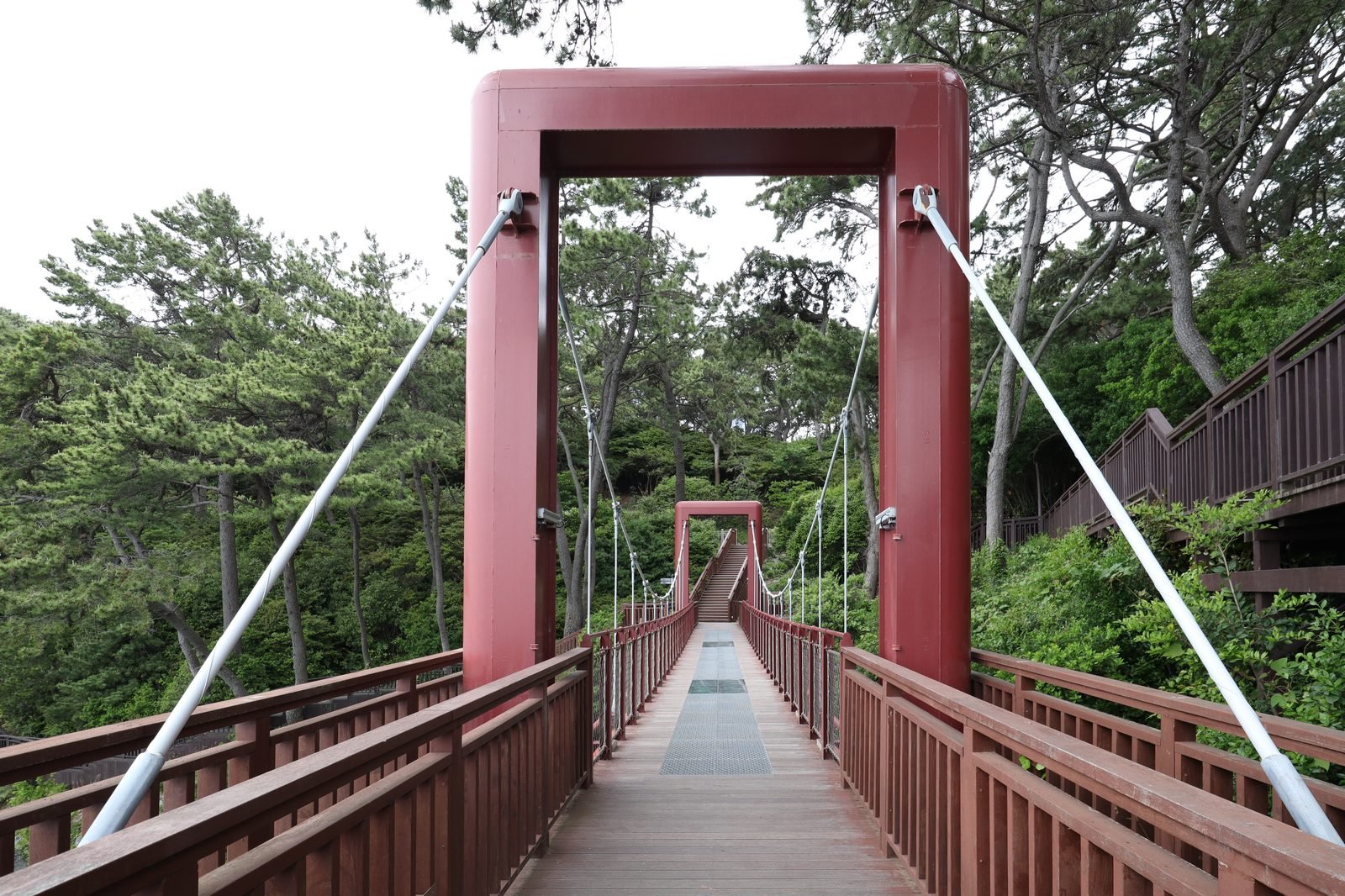
Walking the length of the beach ends at Dongbaekseom, which Visit Busan calls tranquil. The island was once separate from the mainland and is now joined to it by a bridge, and the Dongbaek Coastal Trail, an easy path through green forest, gives open views of the sea and the island. VisitKorea describes Dongbaekseom as an island of camellia trees.

Nurimaru APEC House by Day
Nurimaru APEC House stands on the island. VisitKorea says it hosted the 2005 APEC Summit and has served since as a memorial hall and a conference center. The three-story building is a contemporary recreation of a traditional Korean pavilion, with a roof inspired by the island’s slope, and its terrace looks out to the Oryukdo Islets, Gwangandaegyo Bridge and Dalmaji Hill. It opens from 09:00 to 18:00, with last admission at 17:00, closes on the first Monday of every month, and charges nothing. In October, with daylight and the coastal trains both running short, that last-admission time is the one to plan the afternoon around.
Lighthouse Plaza After Dark
The island is also a night walk. Visit Busan describes the Lighthouse Plaza as the place to see the circular APEC House lit beside the sparkling Gwangandaegyo Bridge, with waves audible on the rocks. Because the building itself closes to visitors at 18:00, the evening view is of its outside. Visit Busan puts the walk from Exit 1 of Dongbaek Station on Line 2 at 14 minutes, and APEC Naru Park, built to commemorate the summit, lies another 10 minutes on foot from the house. Near the island’s entrance, The Bay 101 offers a view of Marine City’s towers that Visit Busan compares to Hong Kong or New York.
Blueline Park, 4.8 Kilometers of Old Rail
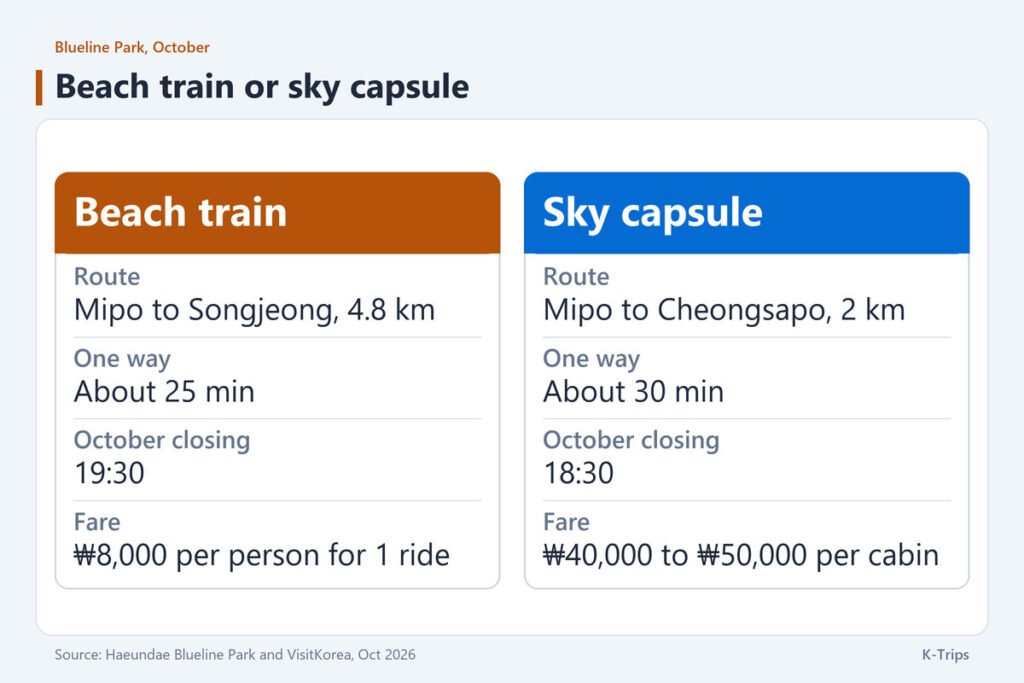
VisitKorea describes Haeundae Blueline Park as an eco-friendly redevelopment of the former Donghae Nambu Line railway, a 4.8-kilometer stretch from Mipo through Cheongsapo to Songjeong. Two services share that corridor. The beach train is a sightseeing train that doubles as transport, running round trip between Mipo and Songjeong by way of Cheongsapo. The sky capsule is a four-seat automatic cabin on a 2-kilometer rail 7 to 10 meters above the sea, from Mipo to Cheongsapo.
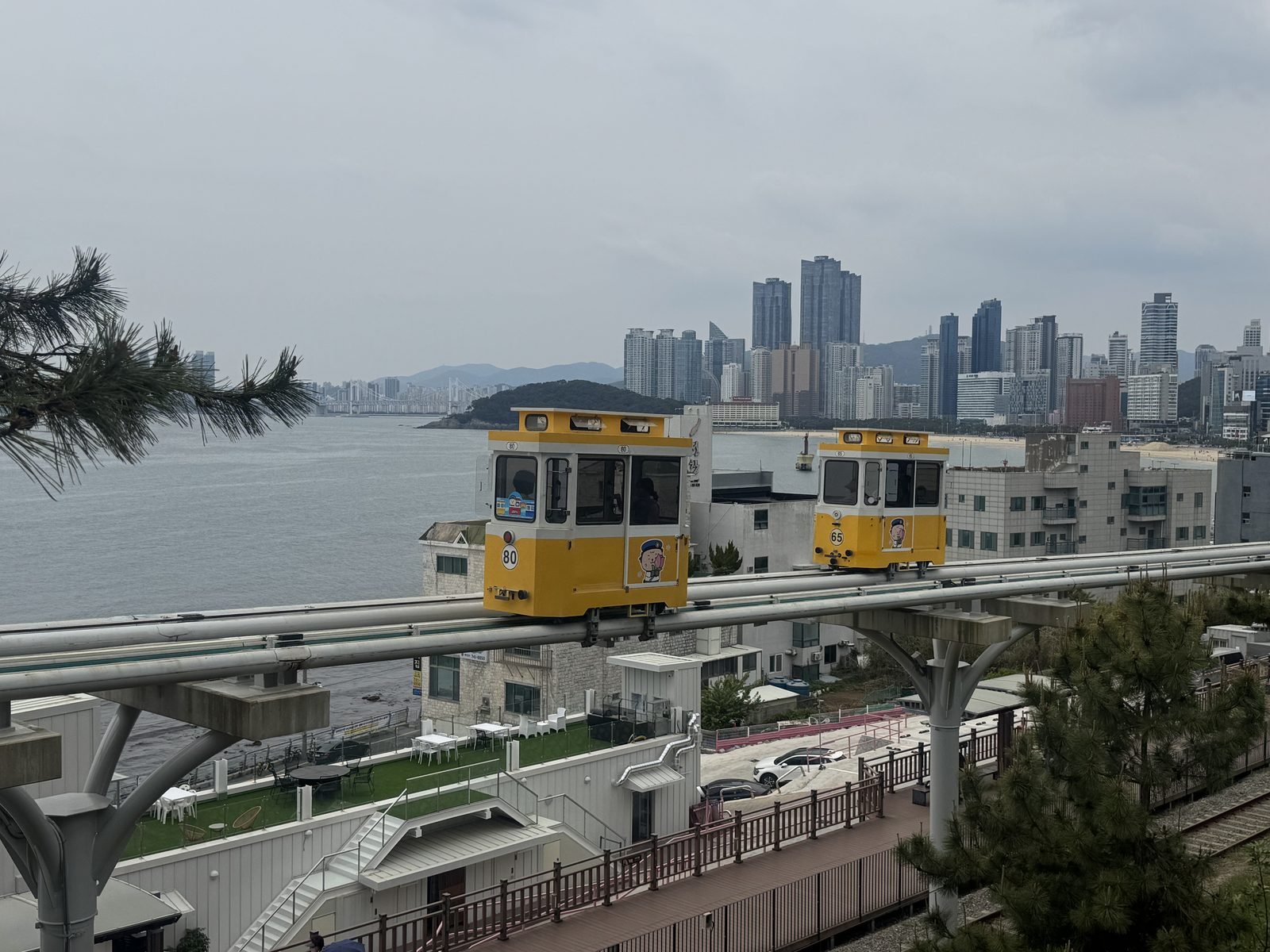

The operator’s train timetable lists seven stops, marked at 0.3, 0.8, 1.1, 2.3, 2.9, 3.4 and 4.8 kilometers along the line: Mipo, Dalmaji Tunnel, Haeworl Skywalk, Cheongsapo, Daritdol Skywalk, Gudeokpo and Songjeong. The capsule timetable lists Mipo, Dalmaji Tunnel and Cheongsapo, and a passenger boards only at the station that was reserved. The park is open all year, parking is available, and the operator’s number is +82-51-701-5548.
Beach Train or Sky Capsule
The two services solve different problems. The train is the cheaper and longer ride, with no assigned seats, and it reaches Songjeong. The capsule is a private cabin priced per cabin and not per person, and it ends at Cheongsapo.
Beach Train Tickets by Number of Stops
The train’s fare page prices a ride by how many times the passenger gets off, not by distance. A 1-ride ticket costs ₩8,000 and ends at the first stop where the passenger leaves. A 2-ride ticket costs ₩12,000 and allows one re-entry. An all-stations ticket costs ₩16,000 and allows each stop once. Mipo and Songjeong are terminals where everyone must get off, and that counts as a stop, so a round trip needs the 2-ride or all-stations ticket. At an average 15 km/h, a one-way ride takes about 25 minutes.
Sky Capsule Pricing by Cabin
On the capsule’s fare page, a one-way cabin costs ₩40,000 for two seats, ₩45,000 for three and ₩50,000 for four, which is ₩20,000 a person for two riders but ₩12,500 for four sharing a full cabin. Round trips cost ₩55,000, ₩69,000 and ₩77,000 and are not sold for weekends and holidays. The cabin averages 4 km/h, about 30 minutes one way, so a round trip means buying a one-way from the other end or riding the train back.
A package of one capsule leg plus the all-stations train ticket costs ₩65,000 for two people, ₩78,000 for three and ₩94,000 for four. Bought separately, the same trips cost ₩72,000, ₩93,000 and ₩114,000, so the package saves ₩7,000, ₩15,000 and ₩20,000. For a pair the saving is modest; for a family of four it covers a meal.
Hours Step Down From Summer to Winter
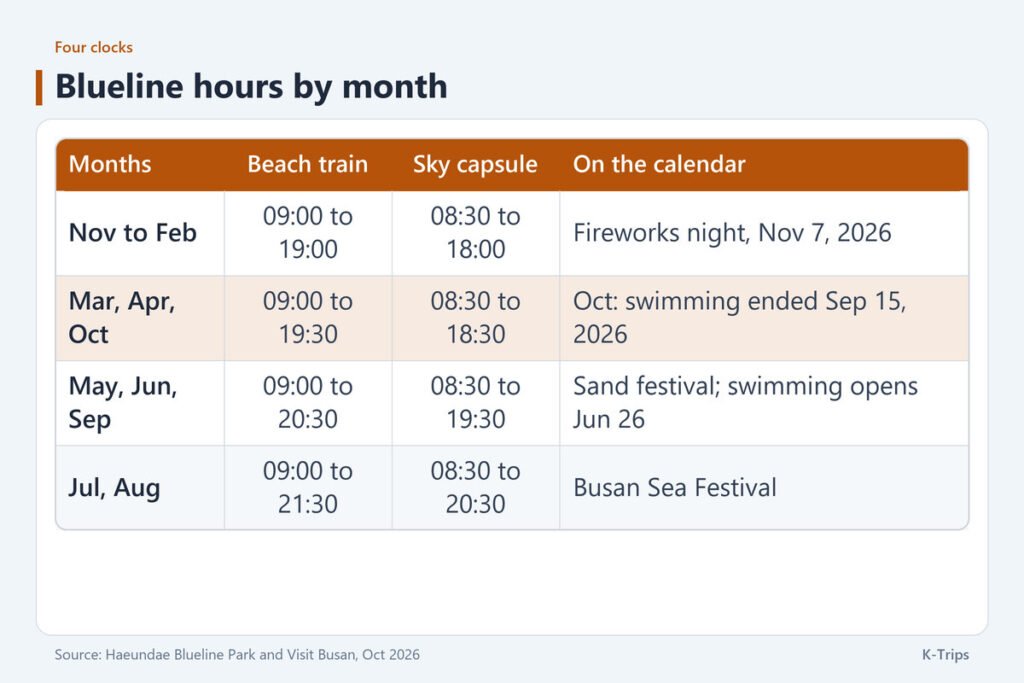
The operator’s timetable pages run on four clocks. From November to February the beach train runs from 09:00 to 19:00 and the sky capsule from 08:30 to 18:00. March, April and October move the closing times to 19:30 and 18:30. May, June and September run to 20:30 and 19:30, and July and August to 21:30 and 20:30. October is therefore the first month on the shorter clock after September, an hour earlier at both closing times.
VisitKorea lists the park at 09:00 to 18:30 for the same October months, which matches the capsule’s closing time and not the train’s. The operator’s tables are the ones used here, because they separate the two services. The operator also warns that weekend and holiday times can shift, that peak-season hours can change with demand, and that both services run in the rain except in heavy rain or a typhoon.
Fireworks Night Is the Exception
A notice posted on October 13, 2026 extends the evening for the 21st Busan Fireworks Festival, on Saturday, November 7. That day the beach train’s last departure is 20:00 from both Mipo and Songjeong, and the capsule’s last slots run from 19:00 to 19:30, against 19:00 and 18:00 on an ordinary November day. The notice adds that times may change with operating conditions.
Reservations, Late Arrivals and Refunds
For the train, the reserved time is the time of the first boarding, and waiting closes 10 minutes before departure. For the capsule, the reserved time is an entry window and not a departure: a booking for 11:00 to 11:30 means entering between those times. Passengers who arrive more than 30 minutes late may be refused without a refund, and on weekends and holidays boarding can run behind schedule, which matters most for the last run of the day.
Refunds depend on timing. A booking cancelled three days ahead is refunded in full, 20 percent is deducted at two days, 30 percent at one day and 50 percent on the day of the ride, before departure. Drinking and smoking are barred on board, and pets may ride in a carrier.
Is Haeundae’s Sea Open for Swimming in October?
Not under the 2026 schedule. Visit Busan lists Haeundae’s opening period as June 26 to September 15, and it tells visitors to check the period before going. Visit Busan’s listing gives no lifeguard hours or swimming zones after that date, so October is best treated as a month for the sand, the headland and the trains rather than the water. The inquiry number on Visit Busan’s Haeundae listing, +82-51-749-5700, is the place to ask about any rule that applies on the day.