
Every big city has one park its residents are quietly smug about, and in Seoul that park is Seoul Forest. It sits right beside Seongsu — the brick-warehouse district currently holding the title of coolest neighborhood in the city — and it does for Seoul roughly what Central Park does for New York: gives everyone a green place to exhale. Locals picnic under ginkgo trees, kids press their faces to the deer enclosure fence, and cafe-crawlers walk off their third flat white along paths that used to be a racetrack. If your itinerary is all palaces and shopping, this is the missing lung.
Seoul Forest at a Glance
- Subway: Seoul Forest Station (Suin–Bundang line), exit 3 — about a five-minute walk to the gates.
- Hours: the park itself is open around the clock; the deer garden runs roughly 07:00–21:00 as of 2026.
- Admission: free.
- Time needed: two to three hours at a stroll; half a day with a picnic.
- Best pairing: the Seongsu cafe district, a short walk away.
From Hunting Ground to Racetrack to Park
The land under Seoul Forest has lived several lives. In the Joseon era, the Ttukseom area served royal hunting parties and military reviews; through the twentieth century it hosted, at various points, a racetrack, a golf course and waterworks facilities. In 2005 the city stitched the site into one of Seoul’s largest parks, with citizens and companies chipping in for tree planting along the way. That layered history explains the park’s pleasantly eccentric shape — it is really a set of themed zones sewn together — and why locals feel a certain ownership over it. This was not a leftover green space; it was assembled, deliberately, as the city’s shared backyard.
What to Expect Inside
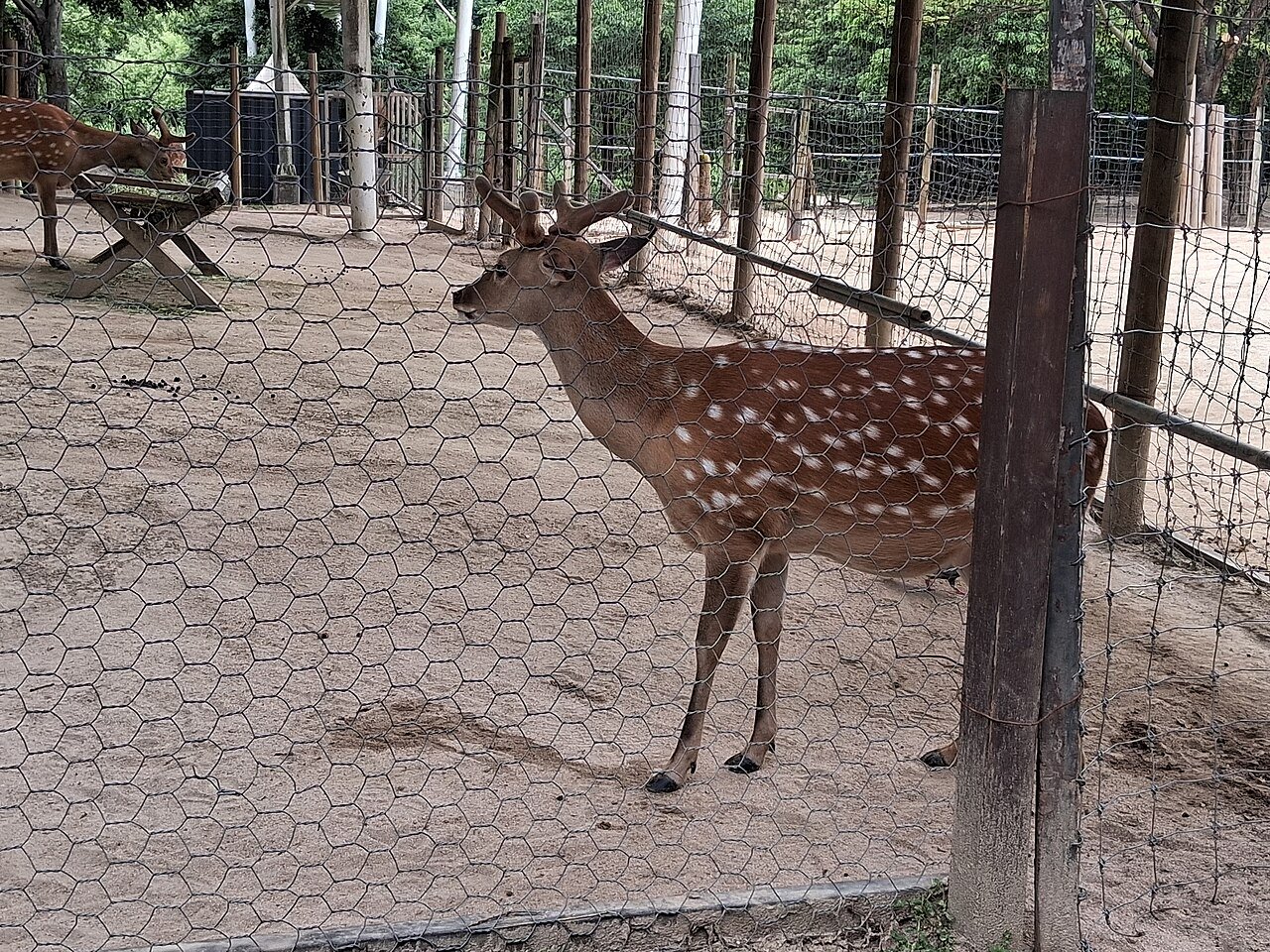
The culture-and-arts zone near the main entrance is the postcard part: broad lawns, fountains, and the ginkgo-lined paths that flood Korean social media every autumn. Deeper in, the ecological forest is the crowd favorite — a fenced woodland where deer roam, with an elevated walkway that lets you watch them from above without disturbing anyone’s grazing. There is an insect-and-butterfly garden that small children treat as the main event, wetlands that birdwatchers treat as the main event, and — the park’s best structural secret — a pedestrian bridge that carries you over the traffic to the Han River waterfront, where picnic mats multiply on summer evenings. Convenience stores near the entrances handle the kimbap-and-drinks logistics; nobody plans a Seoul Forest picnic more than an hour ahead.
Getting There — and Pairing It Right
Seoul Forest Station on the Suin–Bundang line is the easy answer: exit 3 puts you about five minutes from the gates. Ttukseom Station on Line 2 also works, with a walk of roughly ten minutes. The smartest way to use the park, though, is as a cooldown: spend the morning doing caffeinated laps of Seongsu’s showrooms and roasteries, then cross into the trees when your feet vote for grass. If your trip is front-loaded with the classics — the throne halls of Gyeongbokgung Palace, the spring tunnel of the Namsan cherry blossom path — Seoul Forest is the counterweight: no tickets, no queues, no schedule. And if slow afternoons are your travel language, it chains beautifully with an Insadong pottery class the next day — two different ways of watching Seoul move at half speed.
Best Time to Visit Seoul Forest
Autumn is the headliner. The ginkgo grove turns deep gold in early November, and locals arrive around 8 a.m. to shoot it before the crowds — by noon on a peak weekend you will queue for camera angles. Spring runs a close second, when blossoms scatter across the lawns in April. Summer belongs to evening picnickers and the river side of the park; winter strips everything down to bare branches, deer breath and near-total quiet, which is its own kind of wonderful. The deer garden keeps daytime hours — roughly 07:00 to 21:00 as of 2026, so check before you go — meaning animal encounters are a before-dinner activity.
Good to Know
- Admission is free and the park never really closes; individual corners like the deer garden and insect garden keep daytime hours.
- Seoul Forest Station (Suin–Bundang line) exit 3 is the closest approach; Ttukseom Station (Line 2) is a fine backup.
- Weekends bring pop-up markets and heavy picnic traffic — come on a weekday morning for the golden ginkgo shots.
- The pedestrian bridge to the Han River is easy to miss — follow the river signs from the wetlands side of the park.
- Respect the deer: no feeding them your own snacks, no fingers through the fence.
Seoul Forest FAQ
Is Seoul Forest free to enter?
Yes, completely. There is no gate and no ticket — you pay only for whatever snacks and coffee you carry in. That makes it one of the best zero-won afternoons in the city.
How long do you need at Seoul Forest?
Two to three hours covers the deer, the ginkgo paths and a lazy loop at comfortable speed. Add a picnic and the river bridge and it stretches happily into half a day — especially if Seongsu’s cafes are bracketing the visit.
When do the ginkgo trees turn gold?
Typically early November, with a window of a week or two at full color. Timing shifts a little each year with the weather, so check a foliage forecast if the gold grove is the whole reason for your visit — and go early in the morning regardless.
Seoul Forest is not a sight to tick off; it is proof that this city knows how to rest. Bring snacks, skip the plan, and let the afternoon go soft around the edges.