
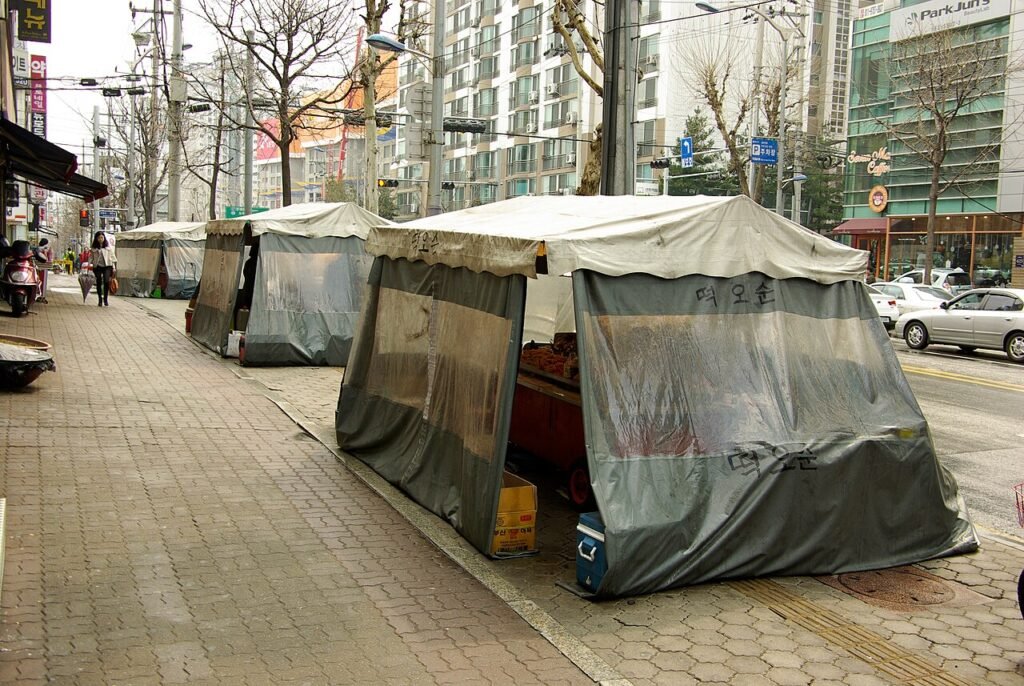
Eating the Orange Tents Without Fear
Nothing says “you are actually in Korea” like a plate of tteokbokki eaten standing up under a plastic awning while the evening crowd streams past. Pojangmacha street food — the pojangmacha are those orange-tented carts and stalls that appear on sidewalks and in markets after dark — is one of the great cheap thrills of a Korean trip, and it is far safer than nervous first-timers assume. The whole model runs on turnover: popular stalls sell out and restock constantly, so the food rarely sits. Still, a little know-how turns you from a hesitant tourist into someone who orders confidently, eats well, and never worries about the bill. Here is the full playbook, from picking a stall to paying at the end.
Step 1: Choose a Busy Stall
The single best safety rule is also the easiest: follow the crowd. A stall with a line of locals is a stall with high turnover, which means fresh oil, food cooked or restocked frequently, and a vendor whose reputation depends on repeat customers. Skip the eerily quiet cart with trays that look like they have been sitting since lunch. Trust anything bubbling, sizzling, or steaming in front of you — hot food cooked to order is your friend. Fried items are best when the vendor drops them fresh into the oil or reheats them on the griddle rather than handing you something room-temperature. In busy market alleys and nightlife districts, you rarely have to look hard: the good stalls announce themselves with a queue.
Step 2: Know What You Are Looking At
A handful of staples show up at almost every stall. Tteokbokki is chewy rice cake in a sweet-spicy red sauce — the national street snack. Eomuk (odeng) is fish cake on skewers, simmering in a broth you can sip for free. Twigim is assorted deep-fried veg and seafood, dipped in the tteokbokki sauce. Sundae is a blood-and-glass-noodle sausage, heartier than it looks. Gimbap rolls, hotteok (a sweet winter griddle pancake), and dakkochi (glazed chicken skewers) round out the classics. If spice worries you, point and ask “maewoyo?” (is it spicy?) — vendors are used to the question and will signal how hot it runs.
Step 3: Order Without Korean
Ordering is mostly pointing, and that is completely normal — nobody expects a tourist to recite menu items. Point at what you want and hold up fingers for the quantity. Two phrases smooth everything: “igeo juseyo” (this one, please) and “eolmayeyo?” (how much is it?). Portions are small and cheap by design, so order a couple of things, eat, and go back for more rather than over-ordering at once. At sit-down pojangmacha tents — the evening drinking version with stools and a menu of anju (drinking snacks) to go with soju and beer — a server takes your order, but the same point-and-smile method works. Watch what the table next to you is eating; it is the best menu in the house.
Step 4: Pay the Right Way
Korea is famously cashless, and many stalls now take cards or mobile pay — but street carts are the one place where cash still matters. Carry small bills and coins so you are never stuck at a cash-only cart, and never hand over a large note for a tiny order. There is no tipping in Korea, ever, so the price you are quoted is the price you pay. In organized markets you pay each stall as you go; at seated tents you settle one bill at the end. Prices shift with time and place, but street snacks remain some of the cheapest good eating in the country as of 2026 — budget food that happens to be delicious.
Step 5: Eat Smart, Not Scared
A few habits keep the experience trouble-free. Eat hot food while it is hot rather than carrying it around for an hour. Bring hand sanitizer, since stalls are not built for handwashing. If you have a shellfish or peanut allergy, be cautious with mixed fried platters and sauces, and ask before assuming. Communal broth cups and shared dipping sauces are part of the culture; if that is not for you, stick to skewers and individually served items. And pace yourself in a market — the whole joy is grazing across many stalls, so a few bites at each beats one giant plate. Done this way, street food is one of the lowest-risk, highest-reward things you will do in Korea. For a legendary place to practice, our Gwangjang Market street food guide is the classic training ground. Stalls also shine during the Chuseok holiday, when many restaurants close — our Chuseok 2026 guide covers what stays open — and because good stalls often sit a subway ride apart, our subway etiquette guide smooths the trips between them.
Good to Know
- Busy stalls are safe stalls — a queue of locals means fresh, high-turnover food.
- Prefer anything hot and cooked-to-order; skip trays that look like they have been sitting.
- Carry small cash — some carts still don’t take cards, even in a cashless country.
- No tipping, ever; the quoted price is the final price.
- “Igeo juseyo” (this, please) and “eolmayeyo?” (how much?) cover almost every order.
- Bring hand sanitizer and, if you have allergies, ask before eating mixed fried or saucy items.
Pojangmacha Street Food FAQ
Is Korean street food safe for tourists to eat?
Generally very safe. Korea has strong food-hygiene norms and stalls rely on fast turnover, so food rarely sits long. Stick to busy vendors, favor hot cooked-to-order items, and use basic hand hygiene, and upset stomachs are rare. The bigger risk for most visitors is underestimating how spicy the sauces run.
What is the difference between a market stall and a pojangmacha tent?
Daytime market stalls sell snacks to go — tteokbokki, twigim, hotteok — that you eat on your feet. The classic orange-tented pojangmacha is more of an evening street bar, with stools, a menu of anju, and soju or beer flowing. Same tented spirit, different mission: one is a quick snack, the other is a night out.
Do I need to speak Korean to order?
No. Pointing and holding up fingers works everywhere, and vendors are used to visitors. Learning “this one, please” and “how much?” makes it friendlier, but you will never be turned away for not speaking Korean. A smile and a point is a universal language at the orange tents.
Once you’ve ordered your first plate of tteokbokki under the awning and paid in coins without a second thought, the whole city opens up — every market alley and neon side street becomes dinner. Go hungry, go curious, and let the busiest stall decide.